






One of the quiet moments in most British restaurant meals is when we tap our cards, squint at the little screen, and add ten or fifteen percent to the total. It feels like a gift – a direct, personal one, from us to the person who just refilled our water three times without being asked. It isn't, quite. But as soon as the transaction goes through, the law forgets all about our intentions, and asks a completely different question. What exactly is a tip? And to whom does it belong?
HMRC has been arguing about this since before most restaurants had card machines. The answer it has arrived at is genuinely strange, and it turns on something most diners would never think to ask.
The Cash in the Pocket (The One HMRC Could Never Quite Catch)
Historically, a tip given in cash to a waiter was in a peculiar position. HMRC has always maintained that cash tips are taxable income in the hands of the recipient. Technically it is. But in practice the employer had no obligation to report it, the waiter received it without it touching the payroll, and enforcement was patchy at best. It was a transaction that happened, in effect, outside the system. Not every server declared cash tips as they were supposed to, enforcement was difficult, and for years both sides lived with the arrangement.
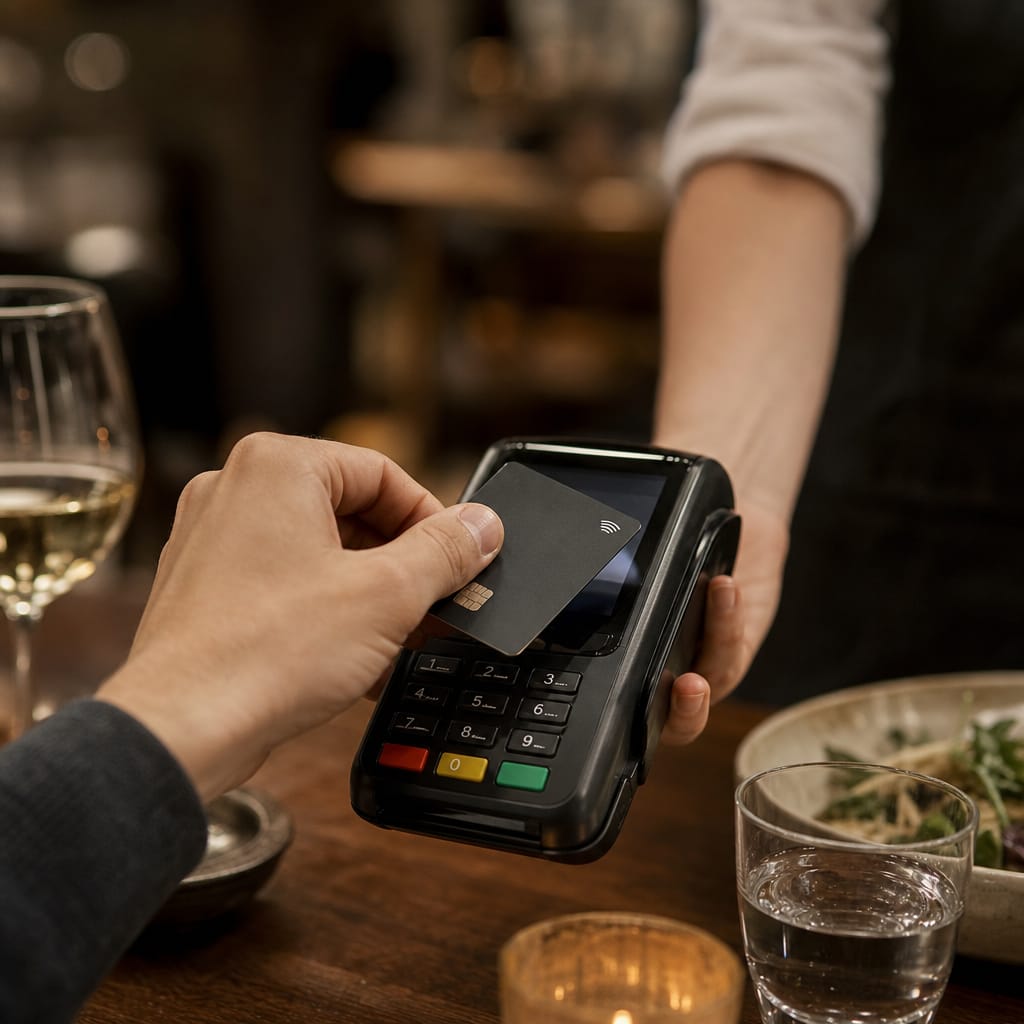
This made cash tips something close to what people imagined tips to be: genuinely discretionary, genuinely private, genuinely belonging to the person who earned them.
The Tap of a Card (Where the Gift Becomes a Payment)
The amount goes through the card terminal. It has nothing to do with your feelings about the meal. The payment goes through the employer’s merchant account and HMRC’s position is that the employer receives the payment first. From that moment, legally, it is the employer’s money, and what the employer then does with that money is a matter for the employer’s policy, the employment contract and, since the Employment (Allocation of Tips) Act 2023 came into force in October 2024, something the government has finally started to regulate properly.
Before that legislation, employers could have kept card tips as revenue and not distributed them. Not topped them up with minimum wage shortfalls anymore (that loophole was closed in 2009), but kept them as revenue. Some did. Most did distribute, but the method mattered enormously.
When card tips were collected by an employer and paid through payroll they became employment income and attracted National Insurance contributions both from the employer and the employee. This meant the worker got less than you put in, and the employer paid more than intended. So your generous 15% did a lap of the tax system before it reached anyone's wallet!
The Troncmaster (An Actual Job, With Its Own Tax Rules)
Here’s the odd bit about tips. A tronc (a pooled system for distributing gratuities) can be distributed more efficiently by a ‘troncmaster’. A troncmaster is not a medieval guild official or a character from a fantasy novel. It is a real role, formally recognised by HMRC, with its own NIC treatment.
The employer genuinely has no say in how the money is allocated in a tronc run by an independent troncmaster. Such a system attracts income tax but not National Insurance contributions. That distinction matters. More of the tip reaches the people it was meant for. The troncmaster will decide the split, will keep records of the tronc and will run his/her own payroll and file with HMRC accordingly.
Some large hospitality groups employ dedicated troncmasters. Some use third-party tronc administrators. Small independent restaurants rarely bother, partly because the administration is considerable and partly because they may not know the option exists.
Three Routes for the Same Tip
It helps to follow one tip down three different routes. Leave £3.50 in cash and hand it straight to your server, and it is their income: telling HMRC about it is their responsibility, not the restaurant’s. Add the same £3.50 by card and have it shared out by an independent troncmaster, and income tax is due through the tronc’s payroll but no National Insurance. Add it by card and let the manager divide the pot at the end of the night, and HMRC treats the employer as involved in the allocation, so National Insurance is due as well. Same diner, same generosity, three different results.

The wording on the bill matters too. A service charge you have no right to refuse is part of the price of the meal and is treated as pay, with National Insurance due. A charge described as discretionary or optional, which the customer can ask to have removed, can be paid through a tronc like any other tip. HMRC’s guidance for employers on tips, gratuities, service charges and troncs, known as E24, sets out how each type is treated.
What the New Rules Actually Changed
In the 2024 legislation, requirements on employers to pass on all tips to workers without deduction and to have a written tips policy available to staff are set out. Workers are now also able to request information about how tips are distributed and – eventually – to raise a claim if they aren't. The troncmaster route remains legal and is, in many cases, still the most tax-efficient way to do it.
But the fundamental strangeness of the card tip remains. You're not giving money directly to anyone. You're instructing an employer, via a payment terminal, to receive some money and distribute it according to rules you are not privy to, governed by a system most people have never heard of, administered occasionally by someone with a job title that sounds like it was invented by a committee in 1987.
Cash, if you happen to have it, remains the only tip that works the way you probably think a tip works.
How Much of a Card Tip Reaches Your Server?
A 15% tip on a £60 bill is £9. In a restaurant that shares tips across front-of-house, kitchen and bar staff, weighted by hours or role, the person who served you might receive only a few pounds of it. That is allowed, as long as the split is fair and follows the venue’s written policy. Workers can ask for information about how tips have been allocated, and nothing stops you, as a diner, from asking a restaurant how it handles tips before you decide how to leave one.
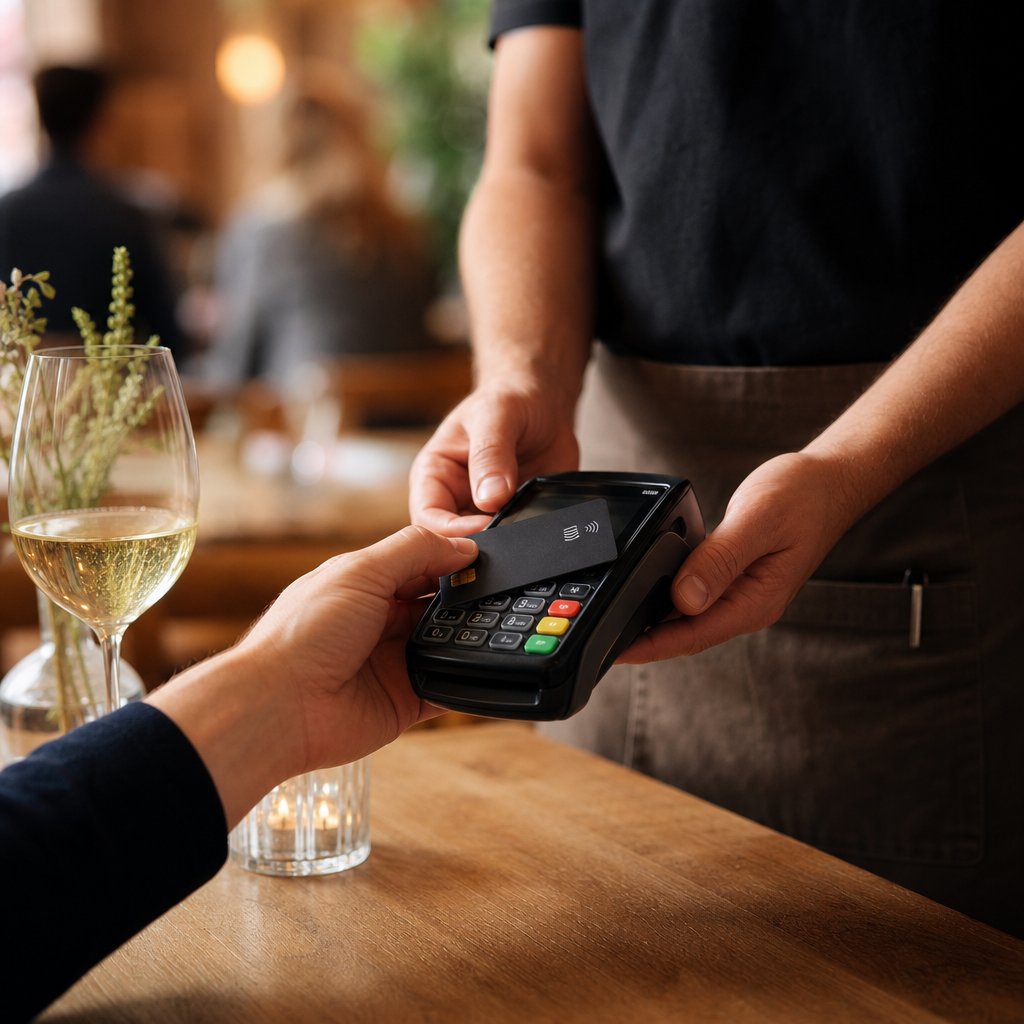
Card tips paid through payroll count as earnings, so they count towards National Insurance. Employee National Insurance is worked out for each pay period rather than across the whole year, which means a week or month with unusually high tips can take someone over the threshold for that period even when their annual income stays modest.
Updated October 2026: expanded with material from related articles we have retired, and updated to name the Employment (Allocation of Tips) Act 2023.
FAQ
Who legally owns a card tip in the UK?
The employer receives a card tip first, because the payment goes through its merchant account. From that point it is treated as the employer’s money, and what happens next depends on the employer’s policy, the employment contract and the Employment (Allocation of Tips) Act 2023, which came into force in October 2024.
What is a troncmaster?
A troncmaster is an independent person recognised by HMRC who decides how a tronc, a pooled pot of gratuities, is shared out. The employer has no say in the allocation. The troncmaster keeps records and runs a separate payroll, so income tax is due but National Insurance is not.
Does a service charge count as a tip?
Not if you cannot refuse it. A compulsory service charge is part of the price of the meal and is treated as pay, so National Insurance is due. A charge described as discretionary or optional, which a customer can ask to have removed, can be paid through a tronc like any other tip.
Is it better to tip in cash or by card?
Cash is the only tip that works as most people imagine. The server receives it directly and is responsible for telling HMRC. A card tip goes through the employer and may be shared across staff, so your server might receive only a few pounds of a £9 tip on a £60 bill.