





The colour consultancies in London are looking very glossy today. Lots of mood boards and Pantone swatches. A confident person in a very good coat will tell a room of buyers what shade of green will be everywhere in 18 months. It looks very modern, like a modern industry. But it looks, frankly, like someone invented all this in the 1990s to justify a nice office and a lot of flights to Milan. What looks modern has bones that are much older, much stranger, and considerably more interesting than the branding suggests.
Trend forecasting was essentially built as a discipline by immigrants who arrived in Britain between roughly 1880 and 1920. Most of these people were tailors and textile merchants, most of them Jewish, most of them from Eastern Europe. They settled in particular pockets of London, Manchester and Leeds – the rag trade districts. What these people brought with them to these pockets was an almost unconscious habit of reading a community through their clothing – a habit that no formal training could have given.
The Skill That Had No Name Yet
It wasn’t about aesthetics or fashion. This was a sort of anthropology, developed across generations of moving between cultures under pressure. If you came from a family that had been moving between towns, between political regimes, between majorities for decades, then you learned very quickly that the cut of a collar, the weight of a fabric, the particular black of a coat told you who someone was, who they were trying to be. They told you what sort of welcome or danger you might expect from them. Cloth was a social code, and reading it was a practical skill, not a creative one.
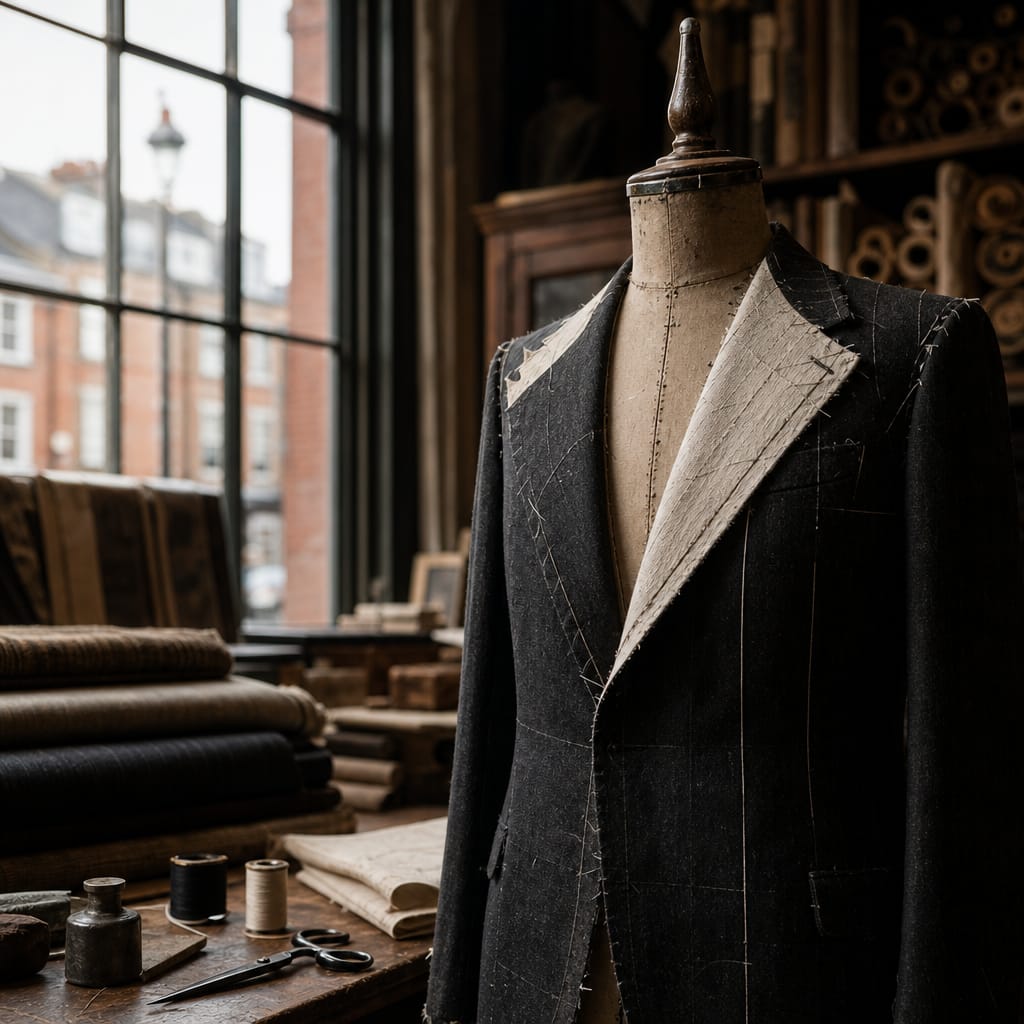
That skill is quite commercially powerful in a trading city, in a market where you're trying to understand what different kinds of people will want to buy next season. These people weren't guessing at style. They had spent their lives watching how dress signals identity, aspiration and belonging, and now they had an industry where exactly that knowledge was money.
The Rag Trade as Reading Group
The East End of London, particularly, became the engine of British ready-to-wear. The Leeds mills and the Manchester warehouses followed, but what was built up in these communities by merchants, cutters, pressers and buyers was not just a supply chain but a very social information network. It was not formal, not written down, just an endless conversation between them about what they were seeing on different bodies in different streets in different parts of the country.
The tailor in Whitechapel, with cousins in Leeds and clients in Kensington, was, in effect, running a very early version of what we'd now call consumer research. He wasn't surveying anyone. He was watching, the way his parents had watched, the way their parents had watched. For trend forecasting agencies in the UK, this is the lineage that runs directly through the mid-century colour and style bureaux, which began formalising exactly this kind of cross-community observation into reports, palettes and seasonal predictions.
When the Watching Became a Business
The informal knowledge network had become something more structured by the mid-twentieth century. Colour forecasting agencies began to publish seasonal forecasts and sell to manufacturers and retailers who needed to commit to fabric orders twelve to eighteen months ahead. Often these were people directly connected to or descended from the rag trade networks. The knowledge had simply acquired paperwork.
What had changed was the packaging. This knowledge was now dressed up in design language, given a consultancy name, packaged up in reports with smart covers. But the core operation – watching how different kinds of people use clothes to signal where they are and where they want to go – was identical to what those tailors had been doing by instinct for generations before any of it had a business model.
What the Colour Agencies Are Actually Selling
It’s worth sitting with, because it quietly changes what you think trend forecasting is. There is no creative act and no prediction in the sense of guessing. At its best, it is the same careful social observation those communities carried across borders — a reading of signals that are already there, embedded in how people actually dress when nobody’s asking them about it. The runway and the mood board came later. The watching came first.
The next time you read that a particular shade of brown is having a moment, you wonder how anyone could possibly know this. Someone, somewhere, was paying the kind of attention to ordinary people that most of us never bother with. They just inherited the habit from people who had very good reasons not to miss a thing.
FAQ
Who started trend forecasting in Britain?
Trend forecasting was largely developed by immigrants who arrived in Britain between roughly 1880 and 1920. Most of these immigrants were tailors and textile merchants, mostly of Jewish extraction and from Eastern Europe. They settled in the rag trade districts of London, Manchester and Leeds. Here they brought their habit of reading communities through their clothing.
What is the rag trade?
The rag trade referred to the clothing and textile industry based in districts of London, Manchester and Leeds. The East End of London became the hub of the ready-to-wear clothing industry in Britain. People involved in the rag trade – merchants, cutters, pressers and buyers – formed an informal network, constantly gaining information from each other about clothing that was being worn in different places.
How did tailors predict what people would want to wear?
The observation of people’s clothing and their needs was also conducted by the tailor of Whitechapel with cousins in Leeds and clients in Kensington. This sense of dress as a signal of identity, of aspiration and of belonging was not created by chance. It was a knowledge of clothing which had been observed and had been handed down from generation to generation.
How did trend forecasting become a business?
In the mid-20th century colour forecasting agencies started to be established. They published seasonal forecasts for manufacturers and retailers. The retailers had to incorporate these reports into their planning 12 to 18 months ahead for the purpose of ordering the necessary fabrics for their stores. Their core activity was, as ever, observing people’s clothing.