






There is a moment, usually somewhere between nine and eleven at night, when you stop feeling properly awake. You might put it down to the wine, or the sofa, or the fact that you've been staring at a screen since breakfast. But the main thing happening is actually in your extremities. Your hands and feet are quietly dumping heat on behalf of your entire body, and the drowsiness you feel is a downstream effect of that process going well. Get it wrong – with the wrong fabric, the wrong layers, the wrong room temperature – and you lose the thread of sleep before you even find it.
The Body's Nightly Cooling Problem
Here's the basic physiology. Your core temperature follows a rough daily rhythm, peaking in the late afternoon and dropping by around one to one and a half degrees Celsius in the hours before and during sleep. That cooling is deliberate. The brain uses lower core temperature as something close to a signal that it's time to shut down. But your body can't just vent heat through the skin the way a radiator does. Instead, it dilates the blood vessels in your hands and feet, using them as heat-loss panels. Warm hands and feet in the evening are a sign the process is working, and cold ones mean it isn't – which is why some people genuinely can't drop off until they've worn socks to bed, however embarrassing they find that to admit.
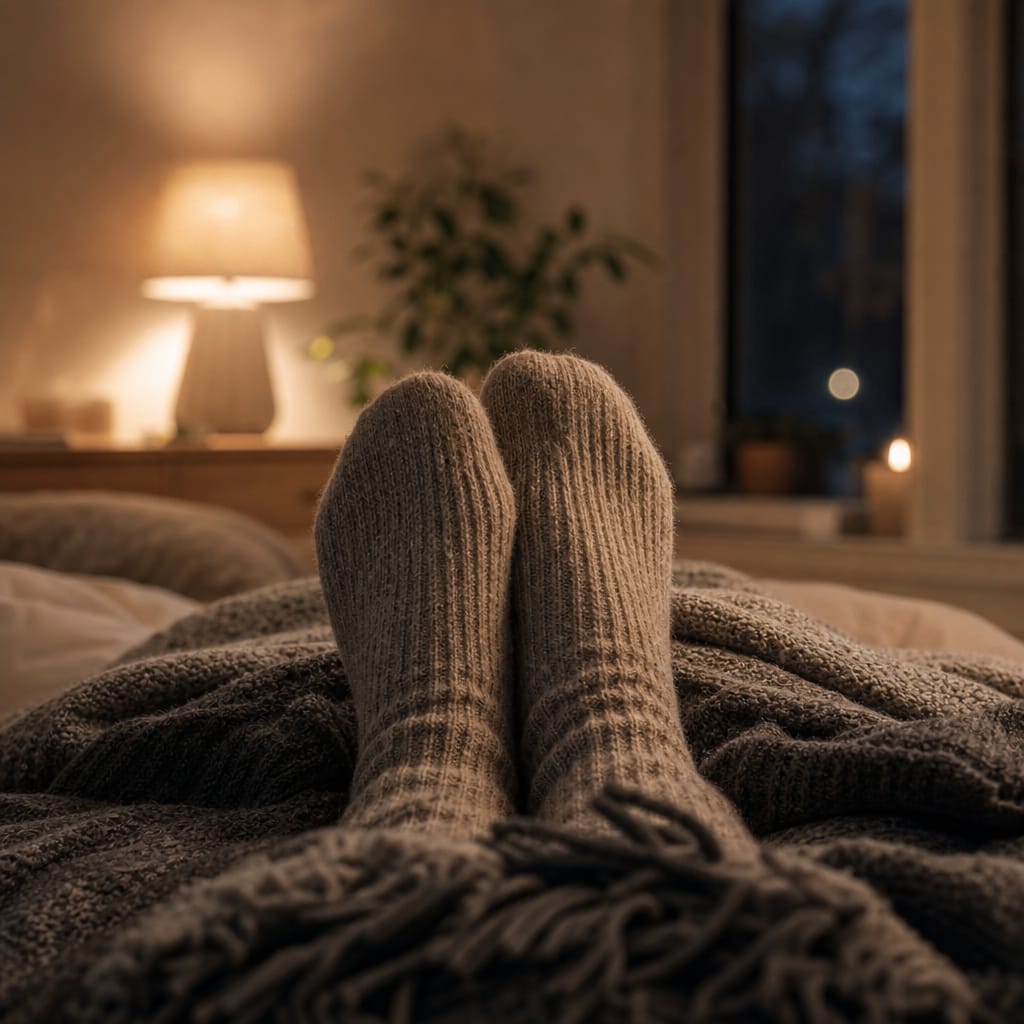
The implication for what you wear – not just to bed but in the two or three hours before – is more direct than most people realise.
What the Fabric Is Actually Doing
The job of evening and sleepwear isn't warmth in the usual sense. It's about keeping the core warm enough that the body feels confident shedding heat through the extremities, without the fabric trapping that heat and confusing the whole system.
Cotton is the default, and it's decent. Breathable, doesn't hold heat aggressively, good at absorbing moisture. The problem is it holds onto that moisture once absorbed. So if you run warm at night and sweat even slightly, cotton eventually becomes a damp, cool layer against your skin – which can tip you from comfortable to clammy at three in the morning without your quite knowing why.
Wool – particularly merino – works differently. It wicks moisture away from the skin and releases it gradually as vapour, staying dry against you even as it's managing heat. Its comfort range is also much broader than most people expect: thin merino can be genuinely cool-feeling in summer and warm in winter, because it's responding to what you're producing rather than just insulating passively. The Victorians hadn't read any of the sleep science but they did know that wool nightgowns were more comfortable than linen ones, and they weren't wrong.
Synthetic fabrics – polyester, nylon – are poor choices for sleep precisely because they're not breathable. They trap the heat the body is trying to offload and push it back inward, which interrupts the cooling that needs to happen and can pull you into lighter, more restless sleep without you ever identifying the cause.
The Nightcap Vindicated
The Victorians have taken a lot of teasing for the nightcap – that slightly ridiculous cloth hat worn to bed for centuries. It looks like prudishness dressed up as practicality. In fact, it was straightforward thermal logic. A significant amount of heat escapes through the head, which has dense blood supply close to the surface and minimal insulating fat. In a cold bedroom – and Victorian bedrooms were very cold – the nightcap kept core temperature stable so the rest of the body could go about its heat-venting business through the hands and feet. Strip it away and the body spends energy trying to compensate. That effort doesn't mix well with sleep.
The bedgown served a similar function. It's a loose, long-sleeved garment worn in the hours before actual sleep rather than just in bed, and it kept the core comfortable during the evening's natural wind-down – the very window when the body most needs ambient temperature to cooperate. That we replaced it with sitting in a draught in a thin T-shirt is not obviously an improvement.
What This Probably Means for Your Wardrobe
Loose layers in the evening rather than one tight warm thing. Socks if your feet are cold, without any self-consciousness about that. Natural fibres next to the skin at night, with wool as the serious upgrade over cotton if you wake at odd hours and can't account for it. And a cool bedroom – the conventional recommendation is around 16 to 18 degrees Celsius – because the room needs to be able to accept the heat your body is trying to shed. Wear too much and seal it all in, and you've blocked the whole mechanism.
The body knows what it's doing. Clothing that understands that tends to cost a little more and last a great deal longer.