




The word "crypto" comes from the Greek kryptos, meaning hidden or concealed. It's where we get "cryptic", "cryptography", and – if you fancy a morbid turn – "crypt". So right from the very start, before you've spent a penny or downloaded an app, the name of this whole universe is telling you that something is being kept from you. Which, honestly, feels about right.
But it gets stranger. Once you try to buy some cryptocurrency, you'll wade into a thicket of perfectly ordinary English words – wallet, mining, coin, chain – that mean almost nothing like what they usually mean. This wasn't accidental. The people who built these systems reached for familiar language quite deliberately, to make genuinely bizarre abstract concepts feel graspable, and the trick mostly works. But if you understand what those words used to mean? You suddenly understand what the technology is doing, and just as usefully, what it isn't.
A Wallet That Holds Nothing
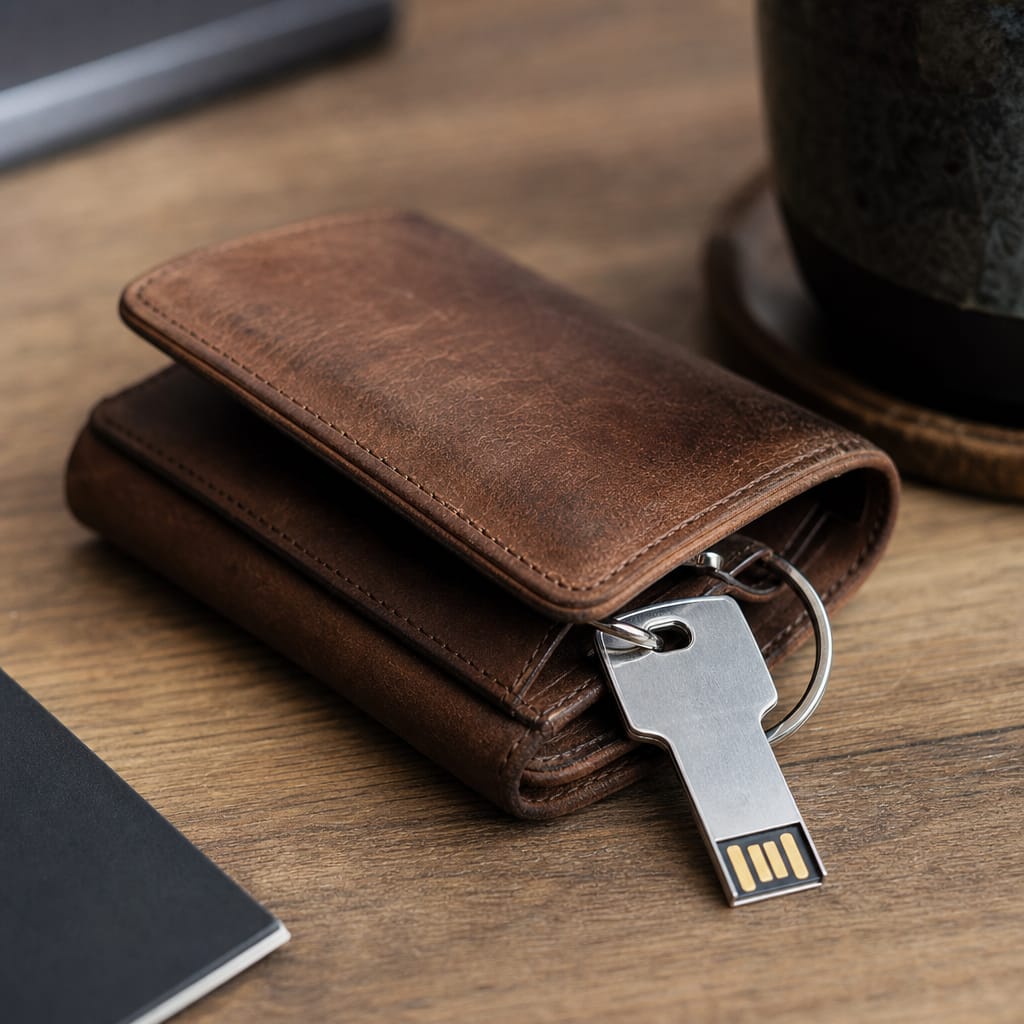
Start with "wallet". You have one. It's leather, probably a bit battered. It holds actual cards and actual notes. A crypto wallet holds none of those things – it doesn't even hold your cryptocurrency. What it holds is a private key, a colossal unique number that proves to the network you have the right to spend a particular pile of digital entries on a shared ledger. The "wallet" is really a key ring. The money never moves into your pocket; it just sits on the ledger, and the wallet is your proof that it's yours.
Mining Without a Pickaxe
Then there's "mining". Gold mining works because there's gold in the ground – physical and finite – and you go retrieve it. Crypto mining borrows the word because the result feels similar: new coins appear, they are finite in number, and retrieving them takes effort and cost. But the effort involved is computers racing to solve an arbitrary mathematical puzzle, billions of calculations a second, burning electricity rather than diesel. The "earth" being moved is computational work, deliberately difficult so that cheating the system is impractical. Call it what it is and it sounds abstract. Call it mining and suddenly it feels like something you understand: scarce, earned, physical. It isn't any of those things, quite.
A Coin That Is Neither Round Nor Metal
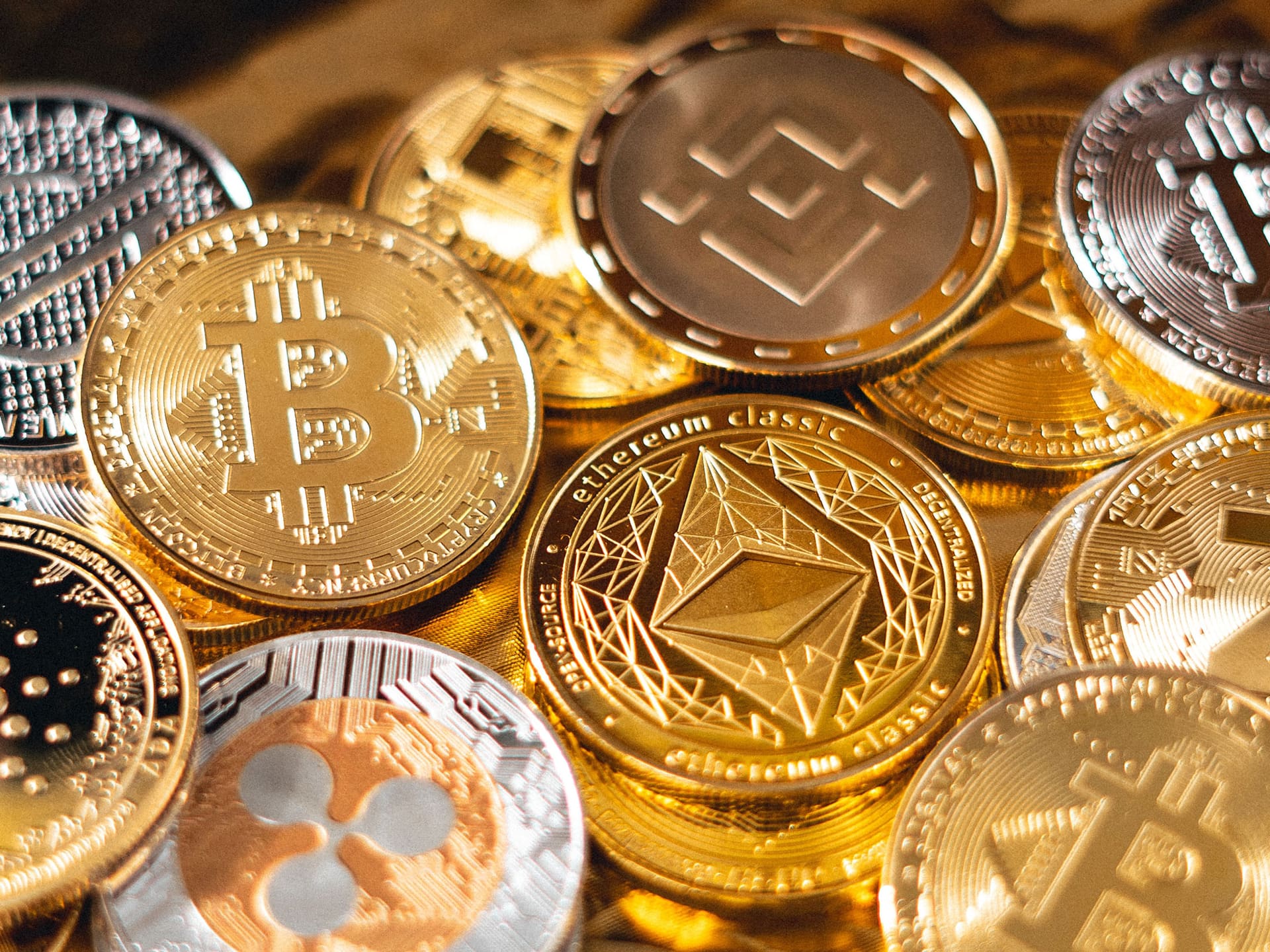
"Coin" is doing a lot of heavy lifting for something that has no physical existence whatsoever. A coin, historically, derived its value partly from the metal it was made of – you could, in theory, melt it down. A Bitcoin cannot be melted. It has no material form. What it does share with a coin is the idea of a unit: discrete, countable, transferable from one person to another. The word is chosen to emphasise that function – medium of exchange, store of value, thing you can hand over – and quietly sidestep the fact that it lives only as an entry in a public database. The coin is the idea of a coin, wearing a coin's name.
The Chain That Isn't a Chain (Except That It Is)
"Blockchain" is the one that earns its name, which is a pleasant surprise. A blockchain is a list of records – transactions, in Bitcoin's case – where each new batch of records (a "block") is mathematically linked to the one before it. Alter any entry further back in the chain and every block after it breaks. It's a chain in the most literal structural sense: each link depends on the last. Pull on one link and the whole thing rattles.
Understanding this matters, because "immutable public ledger" is what the blockchain is – and that tells you far more about why people trust it than "blockchain" does. But "immutable public ledger" doesn't make you want to find out more. "Blockchain" does.
Why the Language Was Chosen So Carefully
None of this naming was cynical exactly, but it was strategic. When you're asking someone to trust an entirely new system – one with no central bank, no physical form, no government guarantee – you reach for language that carries existing trust with it. Coins are trustworthy. Mining is honest work. Wallets keep things safe.
Whether those analogies turn out to be deserved is a separate question. But now that you can see the scaffolding behind the words, you're at least starting from a more honest place than most people who clicked "buy" did.
FAQ
What does a crypto wallet actually hold?
A crypto wallet holds your private key, not your cryptocurrency. The huge unique number is the private key for a digital entry and proves to the network that you are allowed to spend it. The cryptocurrency is held on the shared ledger, and your wallet is just your proof of ownership of some digital entries, similar to a key ring.
Why is it called crypto mining?
The term “mining” was chosen because it resembles in many ways what a gold miner does: new coins are “found”, the coins are limited in quantity, and it takes effort and money to find them. Because in reality a lot of electricity is used by computers trying to solve a deliberately hard mathematical problem for a blockchain network, it’s impractical to cheat.
Is a Bitcoin like a real coin?
Not really. Traditional coins have value partly due to the metal they are made of. They can be melted down for that value. Bitcoin has no material form and only shares the idea of a unit of exchange that is countable and transferable. It is just an entry in a public database.
How does a blockchain work?
A blockchain is a list of blocks. Each block is a list of records such as Bitcoin transactions. Each block is connected to the previous block in a chain by a mathematical link. These links between records form the basis of why people trust the immutable public ledger. If someone were to change something in a previous record then all of the subsequent blocks in the chain would break.