


There is a particular kind of madness that comes with owning cryptocurrency. You wake at 3am, for no obvious reason, and before you've even remembered what day it is, your phone is already in your hand and you're staring at a price chart. Partners find this alarming. GPs would probably find it alarming.
And yet, if you own bitcoin and you happen to live in the UK, your subconscious might actually be onto something.
Crypto markets never close. No bell rings at 4:30pm, no trading halts for bank holidays, no pause while everyone goes to lunch. The market runs continuously, every hour of every day – which sounds like pure chaos. But it isn't. Underneath all that apparent randomness, there is a clock. A genuine, hidden, 24-hour heartbeat. And once you can hear it, checking your portfolio at 3am stops looking like anxiety and starts looking like mild financial literacy.
When Tokyo Wakes Up (Roughly 11pm to 3am UK Time)
The first shift of the global crypto day begins in Asia. Japanese, South Korean and Chinese traders tend to drive activity from around midnight onwards in British time, and this window has its own particular character. Volumes are real but not enormous – Asian retail investors punch above their weight in crypto historically, particularly in altcoins (the smaller, more speculative currencies that aren't bitcoin or ethereum). If you've ever noticed a random Wednesday night when some obscure token suddenly surged, a spike in Tokyo trading volume is a reasonable place to start looking for the explanation.
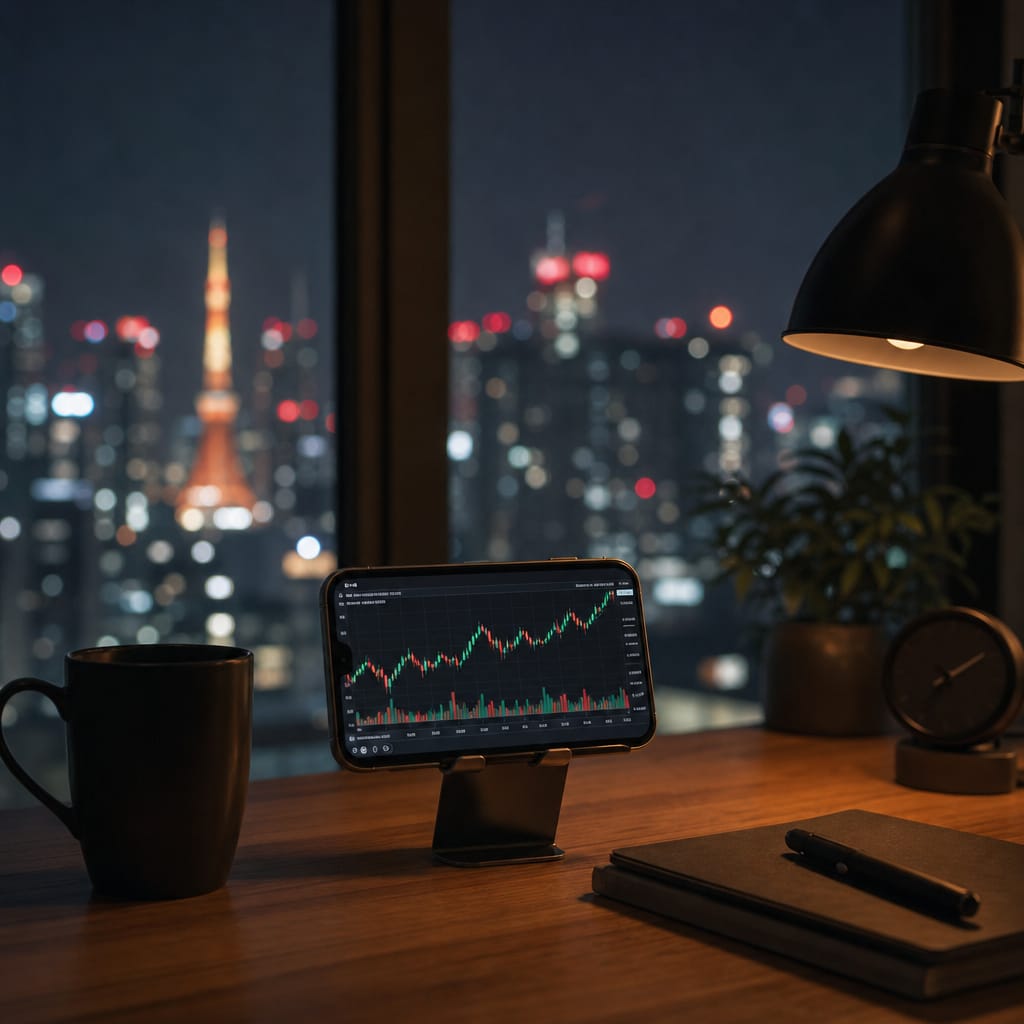
Bitcoin itself tends to move more modestly during this window unless something genuinely dramatic has happened. A regulatory announcement out of South Korea, say, or a crackdown rumour out of Beijing. Those can detonate the price at any hour, but absent a crisis, the Asian session is more of a slow simmer.
The American Alarm Clock Goes Off (Around 1pm to 6pm UK Time)
If Asian hours are the simmer, US market hours are the boil. The overlap between early US trading and the tail end of European activity – roughly 1pm to 5pm UK time – produces the highest trading volumes of the entire 24-hour cycle, which is where most of the sharpest price swings tend to live. This is partly because American institutional money is enormous. Institutional traders don't dabble: when a large US fund moves, the price notices.
There is also the influence of what happens on traditional US stock markets. Bitcoin in particular has developed a strange habit of tracking the S&P 500 in the American session – not perfectly, not always, but enough to be visible. When US equities drop sharply, crypto often follows within the hour. The two markets aren't the same thing, but they share enough investors now that sentiment bleeds between them.
This is, incidentally, why buying crypto on a Tuesday afternoon in the UK is a fundamentally different experience from buying it on a Saturday morning. You're operating in very different weather.
The Dead Hours (Around 6pm to Midnight UK Time)
Late evening in the UK is the quietest stretch of the whole cycle. US traders are finishing up, Asian markets haven't hit their stride yet, and European volume is winding down. Prices can drift quite languidly in this window, with smaller trades having an outsized effect simply because there isn't much else happening. Volatility is lower. Spreads between buy and sell prices can widen slightly on smaller exchanges.
This is the window where nothing much happens, right up until it suddenly does – a news story, a tweet from someone with an enormous following, a whale deciding to sell. The thin market amplifies everything.
What This Actually Means If You're Buying
Understanding the clock doesn't give you a crystal ball. Prices can and do move wildly at any hour for reasons nobody predicted. But it does tell you something useful: crypto isn't a single global market behaving randomly. It's three overlapping markets – Asian, European, American – each with their own participants, their own risk appetites, and their own habits, all running in sequence.
The UK buyer sits in a peculiar spot in all of this. You're awake for the European lull and the American explosion, but asleep for the Asian session entirely. Which means the people most likely to move prices while you're unconscious are operating from an entirely different timezone, responding to entirely different headlines.
So if you do find yourself blinking at your phone at 3am, you're not being irrational. You're just a British person living inside a machine built mostly for other people's hours.