



Somewhere between you clicking "buy" on your investment app and the shares appearing in your portfolio, a small, quiet procession of middlemen has helped itself to your money. Not by stealing it. Perfectly legally. That is just how the market works, and almost nobody explains it properly.
Think of it like a motorway with multiple toll booths. You set off wanting to buy shares in, say, a supermarket chain. You have a price in your head – and by the time it has moved through every booth, that price is not quite what you actually pay. The difference pays for the road.
The Spread: The Oldest Toll of All
Start with the gap nobody draws your attention to. Every share has two prices at any given moment: the "bid" (what someone will pay to buy it from you) and the "offer" or "ask" (what someone wants to sell it to you for). The bid is always a little lower than the offer. That gap in the middle is called the spread, and it is as old as trading itself.
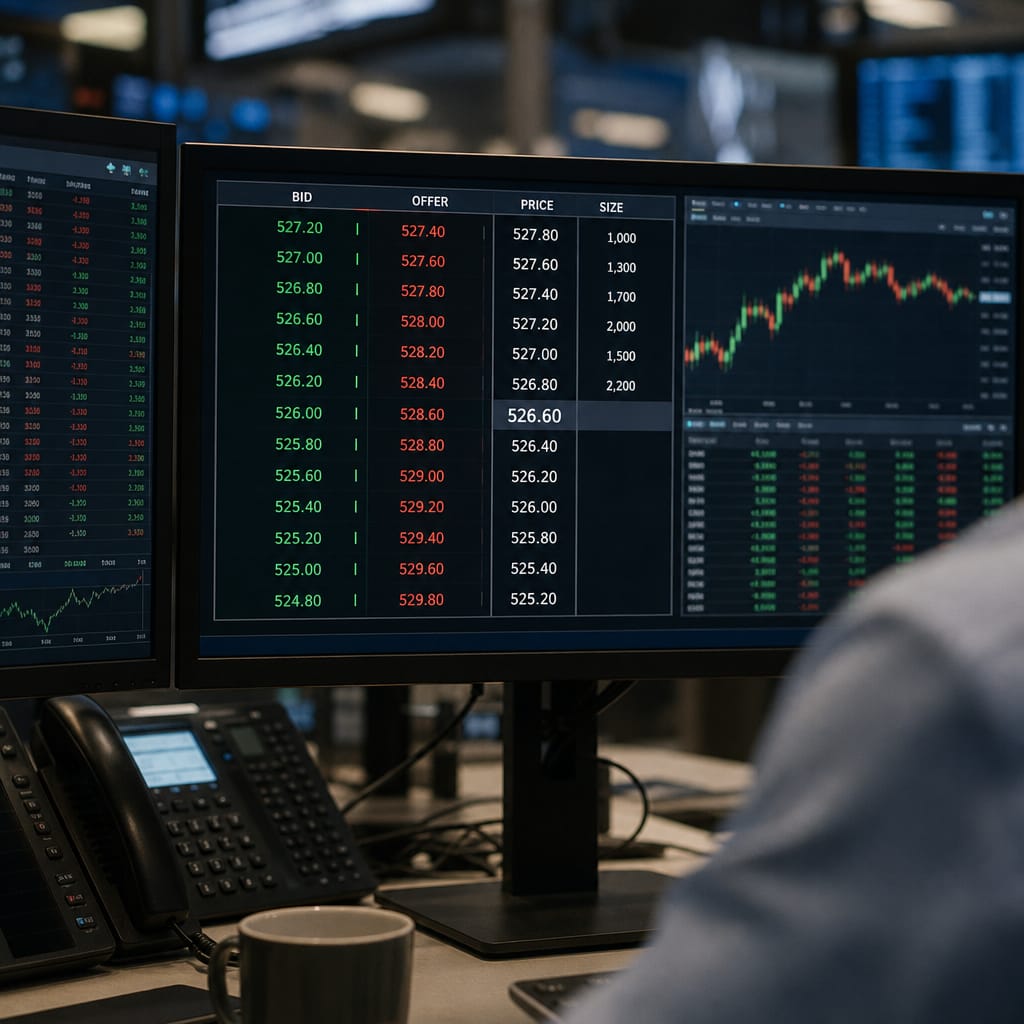
For a large, heavily-traded company like a FTSE 100 firm, the spread might be just a fraction of a penny per share – practically invisible. For a smaller company that doesn't trade much, it can be several pence wide. Every time you buy, you immediately start slightly in the red, because you paid the offer price and the share would only fetch the bid price if you sold it back five seconds later. That gap doesn't disappear. It goes to the market-maker.
The Market-Maker: The Person Who Actually Sells You the Share
A market-maker is a firm – usually a bank or a specialist trading house – that sits in the middle and keeps the market moving. When you want to buy shares and there is no ordinary seller on the other side of your trade at that exact moment, the market-maker sells them to you anyway from its own stock. When you want to sell and nobody wants to buy, the market-maker takes them off your hands.
For this service, the market-maker charges the spread. It buys cheap (the bid) and sells slightly dearer (the offer), thousands of times a day. The individual toll per trade is tiny. Multiplied across millions of trades, it is a very comfortable business.
Retail investors pay this toll in full. Professional fund managers? They trade in enormous blocks and negotiate tighter spreads directly – paying a lower rate on the same road.
Your Broker: The Gatekeeper Before the Gate
Before you even reach the market-maker, you passed through your broker. The broker is the firm whose app or website you used to place the order. They charge you a commission. Some modern apps have blurred this with "commission-free" trading, but they often make it back by selling your order flow – that is, selling information about what their customers are about to buy to other financial firms who can act on it first. For UK stockbrokers, that commission tends to sit somewhere between £5 and £12 per trade at the cheaper end, more at traditional wealth managers.
The broker also has to connect to the exchange somehow. That connection runs through more layers: trading platforms, exchange fees, regulatory reporting costs. None of these surface as a line on your receipt.
The Clearing House and the Custodian: The People Holding the Actual Shares
Once the trade is done, someone has to make sure the shares genuinely change hands – that you get them and the seller gets the cash. That is the job of the clearing house, which settles UK trades through a system called CREST. Then a custodian – usually your broker's own bank – holds the shares on your behalf, since most retail investors never hold the certificates directly. Custody fees are often baked quietly into a platform's annual charges, typically somewhere between 0.15% and 0.45% of your holdings per year.
None of these people are doing nothing. The clearing house genuinely prevents chaos; the custodian genuinely safeguards your assets. But they all extract something for it, and the retail investor is paying every toll – while a large institution trading £10 million at a time has usually negotiated its own rates and routes.
What the Professional Pays Instead
This is the part that sticks in the mind once you know it. When a pension fund or a hedge fund buys shares, it deals directly with the market-maker at a tighter spread, on a different trading venue, often clearing through its own arrangements. The road is shorter and the tolls are lower, because the fund brings enough traffic to bargain with.
Your £200 investment app purchase is sitting in a different lane entirely. You are on the scenic route, and every booth is charging full price.
FAQ
What is the spread when buying shares?
The spread refers to the difference between the bid price and the offer price for a stock. The bid is the price that someone is willing to pay for a stock and the offer is the price that a seller wants to receive for his stock. The market-maker’s bid is always slightly less than the market-maker’s offer. You buy at the offer, so you start marginally behind, and the market-maker earns the difference as its spread.
What does a market-maker do?
A market-maker is usually a bank or a specialist trading house. It is prepared to buy and sell a security. If no ordinary seller is available when you want to buy shares, a market-maker will sell you shares from its own inventory. If no buyer is available when you wish to sell a security, a market-maker will buy it from you. The market-maker makes a spread on its transactions.
How much do UK brokers charge per trade?
Some of the cheaper UK stockbrokers charge between £5 and £12 per trade whilst wealth managers can cost even more. Many of the broking apps now offer ‘commission-free’ trading but this can be a way to then sell their customers’ order flow (information about what they are about to buy) to other financial firms.
Why do professional investors pay less than retail investors?
Professional investors trade in very large volumes and can negotiate better spreads and other terms with the market-maker, as well as trading on alternative exchanges. They may also clear their trades through their own in-house systems. Retail investors, by contrast, trade in small volumes and therefore pay the full rate at every stage of the transaction.