






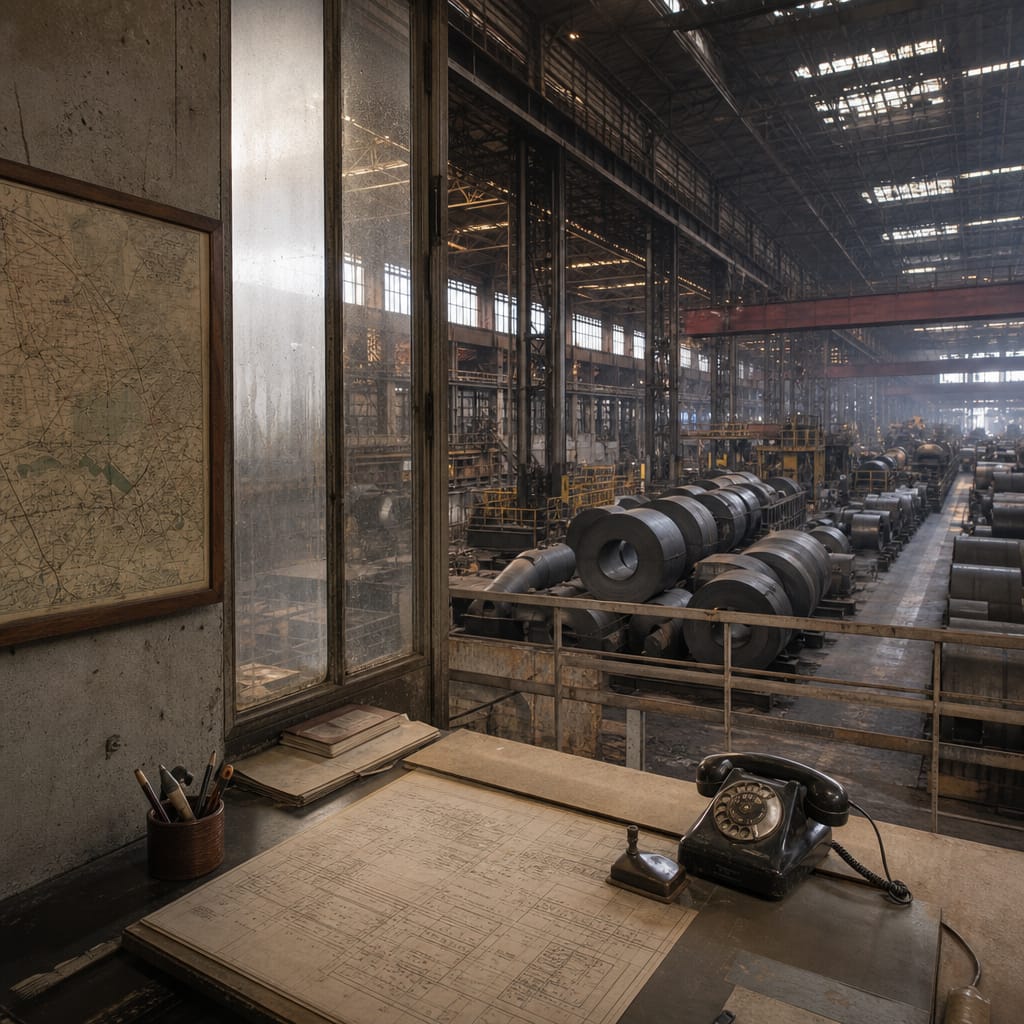
Somewhere in Moscow in 1965, a committee of Soviet economists sat down to decide how much steel the country needed. They had ledgers, production figures, targets handed down from above. What they did not have was any way of knowing whether they were right. By the time the answer came back – too much, too little, wrong grade entirely – the factories had already been built, the workers hired, the resources committed. The mistake was baked in. You would not find out for years.
This is, in a roundabout way, one of the clearest illustrations of what a stock exchange is actually for.
What Gosplan Was Doing (Without Knowing It)
The Soviet Union officially had no stock market. Capital markets were a capitalist pathology; speculation was a crime; shareholders were a bourgeois fiction. What it had instead was Gosplan, the central planning bureau. It spent decades doing by bureaucratic decree exactly what a market does by price signal: deciding which industries deserved investment, which ones got starved, and what everything was theoretically worth.
The difference was in the feedback. When a stock price moves, something real is happening. Thousands of people – fund managers, pensioners, analysts, gamblers with a Freetrade account and too much free time – are all simultaneously making judgements about a company's future. They bet on it. Collectively, in real time. The price that emerges from all that buying and selling is not one person's view of what a business is worth. It is the aggregated, constantly-updated opinion of everyone paying attention.
Gosplan had to substitute a committee for all of that. One committee, meeting occasionally, working from figures that were already months old, trying to perform the same function that millions of daily trades perform automatically. The price signal and the committee decision are trying to answer the same question – the market answers it continuously; the committee answered it wrong.
The Part Nobody Calls "Capital Allocation" (But Should)
Here is what is actually happening when shares in a company go up. It is not just a number getting bigger on a screen. The market is saying: more money should flow here. And more money does flow there, because a rising share price makes it cheaper for a company to raise new capital, attract investors, fund expansion. The opposite happens when a share falls. Capital quietly drains away toward more promising things.
This process has a dry name – capital allocation – but the idea is quite vivid once you see it. The stock market is a giant, permanent, frantic argument about where society's spare money should go next. Every sector, every industry, every speculative new technology is in that argument simultaneously. Electric vehicles versus oil companies. AI chips versus shopping centres. All of it being weighed and reweighed every trading day.
Gosplan had to make those calls by committee too. And the committees, having no price signals to guide them and no daily verdict from millions of participants, kept making the same kind of error: overinvesting in yesterday's priorities, missing the thing that was quietly becoming important, finding out they'd got it wrong somewhere between five and fifteen years later.
Risk, Telegraphed in Advance (If You Know How to Read It)
There is a third thing the market does that the Soviet apparatus had to fake: signalling risk. When investors flee a sector – banks, say, in early 2008 – they are not all having the same thought simultaneously by coincidence. They are reading the same signals, the same patterns in defaults and debt, and pricing the danger in. The falling share price is an alarm going off. It is also the market rationing future investment away from a fragile area before the collapse fully arrives.
Gosplan had no mechanism for this. A state-owned steel plant in Magnitogorsk did not have a share price that quietly collapsed eighteen months before the problems became obvious. The problems just arrived, fully-formed, with no warning built into the system.
None of this is to say markets are always right – they spectacularly are not, occasionally with consequences for everyone's mortgage. But they are wrong loudly, in real time, with feedback. The committee was wrong quietly, in the dark, with no feedback at all until the steel had already piled up in the wrong place.
Which is a slightly strange way to arrive at an explanation of what the FTSE 100 is doing every day, but here we are. The Soviets tried to abolish the stock market. They just invented a worse version of it instead.
FAQ
What is the stock market actually for?
A stock market helps decide where a society’s surplus wealth goes next. The share price of a company is a weighted average of the opinions of many thousands of individuals – fund managers, pensioners, company analysts and amateur traders – and is updated constantly. Share prices rise for a company that investors think shows promise and fall for one that shows little – thus constantly directing flows of capital to the enterprises investors think most promising.
What was Gosplan?
Gosplan was the Soviet Union’s central planning bureau. Officially the country had no stock market, so Gosplan decided by decree which industries to invest in and which to starve. It also fixed a theoretical value on every product and service. A single committee, working with figures that were months out of date, tried to do what millions of traders do automatically every day on the stock markets.
How does a rising share price help a company?
As the price of a company’s shares rises, the cost for that company to raise new capital, attract investors and fund expansion falls, so more money flows towards it. As the price of a share falls, capital will quietly drift away to more promising investments. This is the process of capital allocation.
Are stock markets always right?
No, markets are not always right and they can be woefully wrong, sometimes with consequences for everyone’s mortgage. However, whereas these mistakes are broadcast loudly and in real time with feedback, the Soviet planners got it quietly wrong with no feedback until the steel had already piled up in the wrong place.