





Most things you own will eventually stop working. The kettle fuses, the sofa sags, the phone battery swells to the size of a small pillow. But money? Money is supposed to be the permanent thing, the thing you convert everything else into precisely because it keeps. Except it doesn't, not always. Money has a shelf life, and the machinery that processes its expiry is quietly one of the more fascinating bureaucratic systems in the country.
When the Bank of England Decided Your Tenner Was Rubbish
In September 2022, the old paper £20 and £50 notes were demonetised. If you had one after the deadline, the Bank of England would still exchange it – but most high street banks wouldn't touch it. Most shops already wouldn't. And if you forgot about the fiver tucked inside a birthday card from 2019, that was largely your problem. The Bank estimates that at any given point, hundreds of millions of pounds' worth of notes are simply gone: lost down sofas, tucked into drawers, left in jacket pockets, ferried abroad as souvenirs. They never come back. They just quietly become paper.
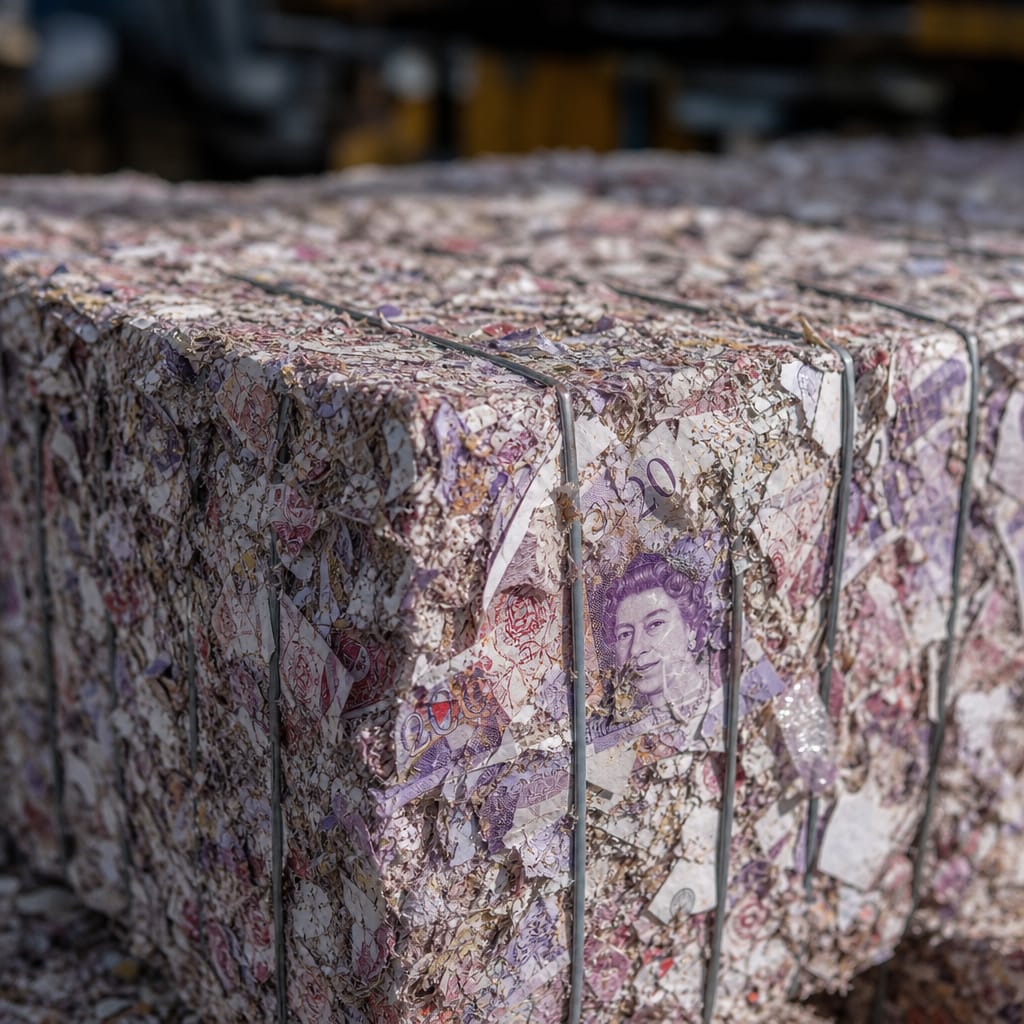
The notes that do come back, though, go through something rather satisfying. The Bank of England shreds withdrawn banknotes and then compresses the pulp – which occasionally gets sold or donated as compost and garden mulch. Growing tomatoes in the remains of legal tender: grimly poetic.
The Dormant Account and What Happens to Your Forgotten Savings
Banknotes going to landfill are one thing, but the stranger and more consequential story is what happens to money sitting in accounts that nobody touches. In the UK, a bank account is classified as dormant if it hasn't been used for fifteen years. At which point the balance doesn't just sit there indefinitely. Under the Dormant Assets Scheme – which became law in 2008 and was extended to cover a much wider range of financial products in 2022 – the money is transferred to a central reclaim fund and then redistributed to good causes in England, Scotland, Wales and Northern Ireland.
The important caveat: it's not gone. If you remember that old building society account you opened in 1998 and never closed, you can still claim the money back through the reclaim fund. Your legal right to it doesn't expire. But in practice, most people never do claim it, which means billions of pounds have passed through the scheme since it launched. At last count, well over £800 million had been redirected into things like youth programmes, financial inclusion charities and community projects – all from bank accounts people simply forgot existed.
What “Dormant” Really Means
The fifteen-year rule is about the customer, not just about the money. An account is only considered to be dormant after a period of fifteen years of inactivity by the customer, and banks and building societies are expected to try to trace and contact the customer before any money is passed to the scheme.
When money is transferred from a dormant account, it will be held by Reclaim Fund Ltd, the body set up under the scheme to hold these dormant balances, which keeps back enough to allow repayment of the account holders’ claims. Any surplus will be used to benefit good causes. However, the right of account holders to reclaim their money from dormant accounts will never be transferred away from them, and the money can be reclaimed from the bank or building society where the account was held. That institution will be repaid by the fund.
Premium Bonds and the Ghost of Your Dead Grandmother
NS&I Premium Bonds are probably the most widespread example of this kind of forgotten money in Britain. There are currently over two million unclaimed Premium Bond prizes sitting with NS&I, some of them going back decades. Either the bondholder moved house without telling anyone, or died without anyone in the family knowing the bonds existed, or simply forgot. NS&I will still pay out on them – prizes don't expire – but they can only find you if you give them something to find you with. The money just sits there, quietly winning the odd prize that nobody claims.
The same pattern crops up across the financial system: workplace pensions from jobs people left in their twenties, dormant ISAs, old savings bonds, the forgotten share certificates from privatisations in the 1980s. British Gas shares handed out in 1986 to people who never quite got round to selling them and then lost the paperwork.
How a Forgotten ISA Turns Up
A typical story, rather than any particular case, is that someone opened a cash ISA when interest rates were attractive and, over time, the interest rate dropped. As a result, the account has been left untouched for years. When the account holder eventually dies, all the paperwork for probate is completed but there is no mention of the account(s) held by the deceased owner, because it was never written down anywhere the family would think to look. That is why one of the most useful bits of financial housekeeping is for the account holder to complete a simple list of all accounts currently held and to inform their executors of where this has been left.

What to Do If You Think You're One of the Forgotten
Free tools exist to track this down. My Lost Account (mylostaccount.org.uk), run by UK Finance, the Building Societies Association and NS&I, reunites people with old bank and building society accounts and cash ISAs. The Pension Tracing Service finds lost workplace pensions, and NS&I has its own unclaimed prizes search. None of this is complicated or secret – it's just not well-advertised, because the entire situation depends slightly on you not knowing about it.
The honest financial lesson buried in all of this isn't about investment strategy or interest rates. It's that money requires maintenance in a way that most people don't treat it as needing. An account opened and then ignored is not money safely stored. It is money slowly drifting toward the edge of a shelf, and the system has its own ideas about where it goes when it finally falls off.
Updated October 2026: added detail on how dormant accounts are handled and corrected our description of My Lost Account.
FAQ
What counts as a dormant bank account in the UK?
A UK bank account is classed as dormant when the customer has not used it for fifteen years. The rule is about customer inactivity, not just a balance sitting still. Banks and building societies are expected to try to trace and contact the customer before any money is passed to the Dormant Assets Scheme.
Can I still claim money from a dormant account?
Yes, you can still claim it, because your legal right to the money never expires. You ask the bank or building society where the account was held, and the fund repays that institution. Reclaim Fund Ltd holds the dormant balances and keeps back enough to cover account holders’ claims, with any surplus going to good causes.
Do Premium Bond prizes expire?
No, Premium Bond prizes do not expire, and NS&I will still pay out on them even if they go back decades. There are currently over two million unclaimed prizes sitting with NS&I. The problem is tracing the holder, as NS&I can only find you if you give them something to find you with.
How do I find a lost bank account or pension?
Several free tools can help. My Lost Account (mylostaccount.org.uk), run by UK Finance, the Building Societies Association and NS&I, reunites people with old bank and building society accounts and cash ISAs. The Pension Tracing Service finds lost workplace pensions, and NS&I has its own unclaimed prizes search for Premium Bonds.