






Knowing exactly what you want is a peculiar sort of confidence. And until recently you had absolutely no idea. The British upper classes in the mid-nineteenth century were the richest leisure class the world had ever produced: they had the money and the time. They had country houses, shooting parties and club memberships. But what they did not have, though nobody would have dared say so out loud, was the faintest clue what a good hotel was supposed to feel like.
What Victorian Luxury Actually Looked Like (It Isn't Pretty)
Before a pair of Swiss and French emigres arrived and quietly rewired everything, grand British hospitality was all about excess. If a dinner had twelve courses, the next host served fourteen. The dining rooms were cavernous, draughty and full of heavy silver which was there to communicate wealth, not to make eating pleasant.
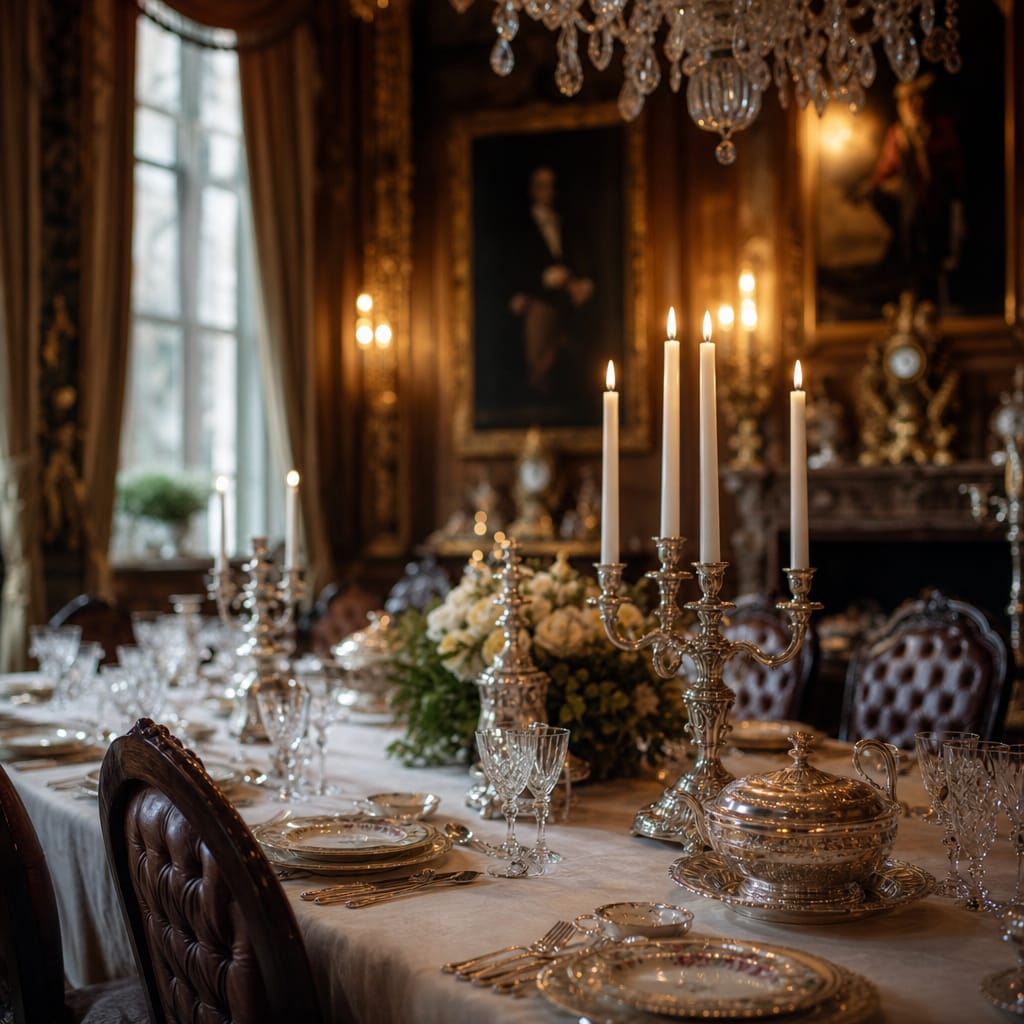
Hotels, such as they were, tended toward the gloomy and the institutional, valuing solemnity over comfort. The guest's physical ease did not seem to be more than a secondary concern, if it was considered at all.
The British ruling class ate too much, drank heavily, and confused grandeur with scale. More of everything was the operating principle. Subtlety was, at best, a foreign concept. As it turned out, it was literally a foreign concept, and it arrived by train from the Alps.
The Two Men Who Changed the Standard
César Ritz was born in a Swiss village and Auguste Escoffier in a small town in Provence. Neither of them came from money but both had an almost missionary sense of what a hotel should be like. For both of them, hotel luxury was not a statement of the owner's wealth but a seamlessly managed experience designed entirely around the guest. Ritz understood instinctively that real luxury is invisible: the absence of friction, the room being just the right temperature, the staff member who remembers your preference without being told twice.
Ritz and Escoffier arrived at the Savoy in London in 1889. Ritz was the manager and Escoffier ran the kitchen. They did not find a grateful institution waiting to be improved. The Savoy already considered itself magnificent. What they did, with extraordinary patience and precision, was to demonstrate the difference between “magnificent” and “good”.
Escoffier stripped the kitchen of its baroque excess. He introduced the brigade system – a clear hierarchy of roles that made service faster and food consistent – and simplified French classical cooking into something that could be executed at the same standard every single night. If you are after that kind of standard for yourself, somewhere like https://www.luxuryholidays.co.uk/ is worth a look.
The effect on London's wealthy classes was immediate and faintly embarrassing, in the way that all genuine revelations are. They realised, without quite admitting it, that they had been doing it wrong.
The Lesson That Travelled Back Out Into the World
Here is the odd thing. The standard of Swiss discretion and French technical rigour that Ritz and Escoffier imported into Britain — the idea that service should be felt rather than performed — did not stay in London. It bounced, so that British guests who had absorbed the Ritz education carried those expectations with them when they travelled. The Grand Tour, which had always been about acquiring taste by going abroad, now had a benchmark: a benchmark built by foreigners on British soil.
It’s essentially the invisible architecture underneath what we now call luxury travel. When a hotel anywhere in the world promises “a curated experience” or “discreet, personalised service”, it is, without knowing it, translating an Alpine and Parisian philosophy which was originally designed to correct the terrible hospitality habits of the Victorian British aristocracy.
What "Luxury" Means Now
The word is applied to everything from a Premier Inn suite to a private island in the Maldives, which makes it almost useless. Yet, once you peel it back to what Ritz meant by it, it becomes quite specific. Nothing should feel like an effort, nothing should have to be explained, and you should never once feel that the hotel is trying to impress you. The pre-Ritz Victorians were after ‘impression’, but that’s not quite the same thing. The actual thing is different: it’s somewhere that already knows what you need.
The British upper classes spent centuries assuming they set the standard for civilised living. Then two men from the Alps and Provence showed up and gently, professionally, proved them wrong. And from that rather humbling moment, modern luxury travel was born.
FAQ
Who were César Ritz and Auguste Escoffier?
The two Swiss and French hoteliers who reshaped British hospitality were César Ritz and Auguste Escoffier. Ritz was born in a village in the Swiss countryside and managed the Savoy in London from 1889. Escoffier was born in a small town in the Provence region of France and ran the Savoy’s kitchen from 1889. Neither came from money, though both had a strong sense of what a hotel should be.
What did Escoffier change in the Savoy kitchen?
Escoffier established the brigade system, creating a clear hierarchy of roles within the kitchen and thereby enabling quicker service and more consistent food. He further simplified the existing highly ornate style of Savoy cooking and French classical cuisine, so it could be consistently produced seven nights a week.
What was Victorian British luxury like before Ritz?
Victorian luxury was built on excess rather than comfort. Hosts competed on quantity, so a twelve-course dinner was followed by a fourteen-course one. Dining rooms were cavernous and draughty, full of heavy silver meant to show wealth, while hotels were gloomy and institutional, valuing solemnity over the guest’s physical ease.
What does luxury actually mean in a hotel?
Luxury in the Ritz sense is invisible: nothing should feel like an effort, nothing should need explaining, and you should never feel the hotel is trying to impress you. It is the absence of friction, with staff who remember your preferences and a hotel that already knows what you need.