





A wealthy Englishman of the late eighteenth century was sat down by his physician and told, with complete professional authority, that his lungs required the air of Harrogate. Not mountain air in general — Harrogate specifically. The sulphurous springs there had measurable, documented, essentially miraculous properties.
The Englishman’s journey to Harrogate was not a holiday; it was medicine. The expense was not indulgence, it was treatment. And this distinction mattered enormously, because it gave the man permission to spend money he would have spent anyway.
This is the oldest trick in luxury travel, and it has never stopped working.
The Waters That Fixed Everything
Bath, Buxton, Baden-Baden and Vichy were Spa towns that were not resorts in the modern sense. They were destinations prescribed by doctors, and the prescriptions were surprisingly specific. A south-facing aspect was considered genuinely therapeutic. Certain elevations were held to have particular effects on particular organs. And then there was the iron content of one spring versus another, debated with the same gravity we'd now apply to a clinical trial.
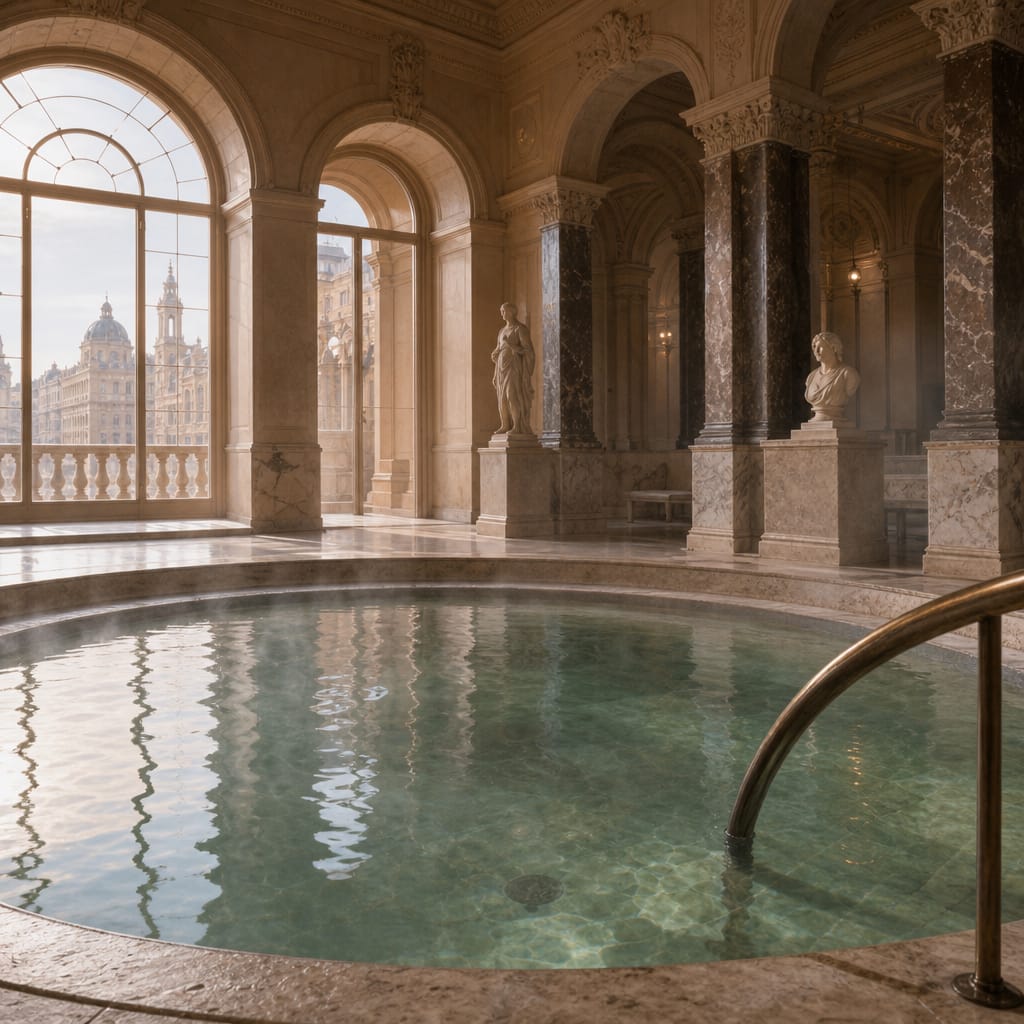
Wealthy patients, clutching what amounted to medical referrals, spent weeks drinking foul-smelling water, bathing in it and convalescing in grand accommodation. And all this was called a cure.
The pleasure – the concerts, the promenades, the elaborate sociability, the very fine food – was technically incidental. The water was the point.
The Mountain Air Prescription
The crowded and democratic spa towns were not to aristocratic tastes. The physicians helpfully discovered that Alpine altitude had extraordinary properties. So Switzerland became the sanatorium of Europe, with Davos treating tuberculosis. And the air at a certain height above sea level was understood to do something specific and restorative to the blood.
The Grand Hotels were built at these elevations not as luxury destinations but as annexes to an idea: that geography itself could heal you, if you chose the right geography and could afford to stay long enough for it to work.
The Swiss wellness retreat didn't invent itself. It inherited this whole framework and simply swapped out the Victorian vocabulary. "Altitude therapy" became "digital detox", the sanatorium became the spa, and the prescribed rest cure became "restorative travel". The clientele, and the price point, remained broadly the same.
The Sea-Bathing Revelation
In Britain sea bathing was a fashionable upper-class pursuit which began almost entirely as medicine. The cold salt water was believed to harden the constitution, treat glandular disorders and correct any number of vague nervous complaints. The physician George Cheyne was recommending it in the early eighteenth century.
By the time Brighton had a Royal Pavilion, the therapeutic logic was already established: a south-facing shore, correct water temperature, properly supervised immersion. The pleasure of the thing was not irrelevant, but it needed the medical framing to justify the cost and the journey.
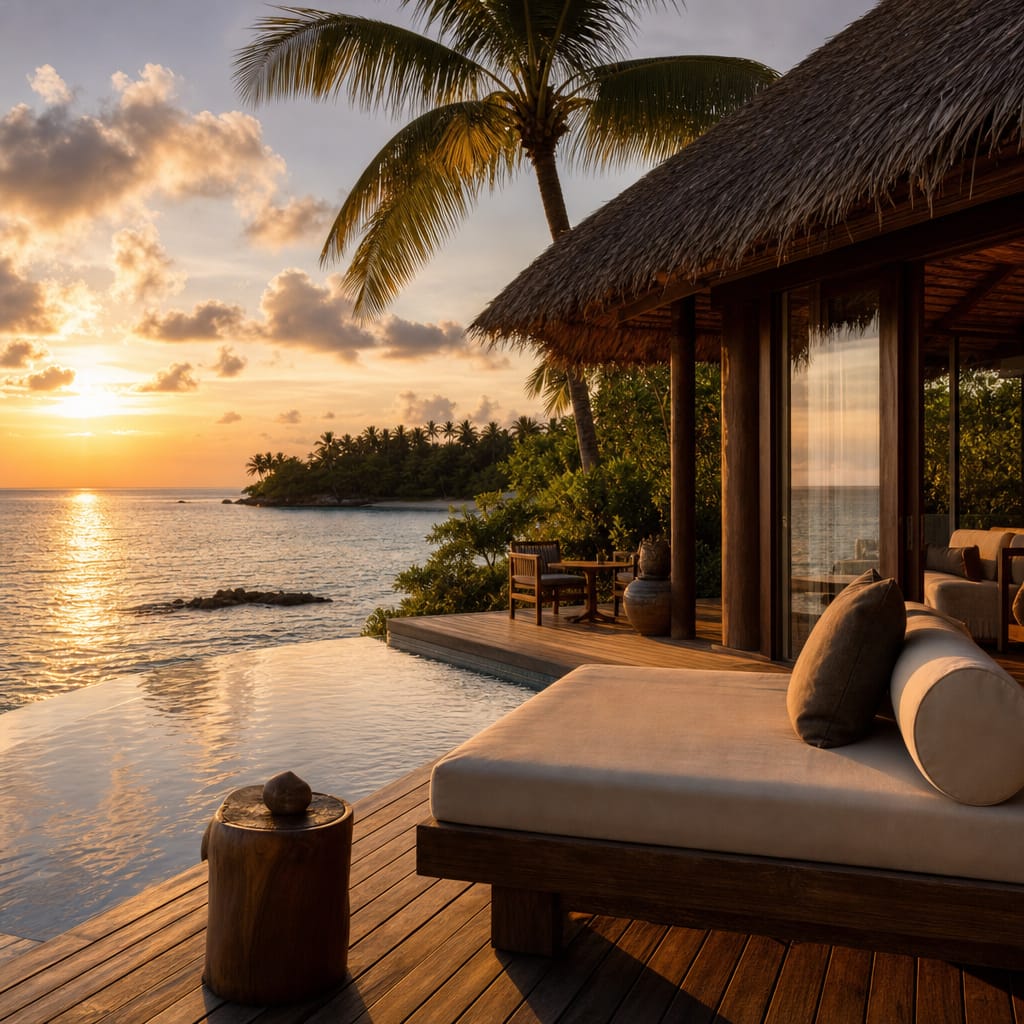
An overwater villa in the Maldives is structurally the same thing: you’re by the ocean, away from ordinary life, warm, and feeling physically that you are somewhere doing you good. Nobody calls it a cure now, but the language around it – restoration, reset, recharging – does exactly the same work as the physician’s note did in 1790.
For those on a more luxury holiday note, sites like Original Travel offer trips built around this idea of purposeful escape, though they’d phrase it rather differently.
The Justification That Never Left
The wealthy have almost always needed a reason beyond pleasure to travel comfortably. Pure hedonism carries a whiff of embarrassment, while restoration and wellness are almost responsible.
In the eighteenth century travel was wrapped in medical geography, in the nineteenth in the science of altitude and hydrotherapy and in the twenty-first in neuroscience and cortisol levels and the measurable benefits of switching off.
The infinity pool of a five-star resort is a direct descendant of the thermal bath. Morning yoga at elevation is the rest cure with better activewear. And the juice cleanse? That’s the sulphur spring, minus the smell and with considerably better marketing.
None of which is cynical, exactly. People do come back from these places feeling better. The Harrogate visitor probably did too, some of the time. The human need to believe that a specific beautiful place has specific restorative power is ancient and persistent and, honestly, rather touching.
The script just never changed. Only the brochure did.
FAQ
Why did doctors send wealthy patients to spa towns like Bath and Buxton?
Long-staying guests at health resorts like Bath, Buxton, Baden-Baden and Vichy were treated by their doctors as full-time patients taking medicinal mineral water and baths and spending time in grand convalescent accommodation. Concerts, restaurants and sociability were, officially, mere appendages but provided cover for people of means to spend money which they would probably have spent anyway.
Why did Switzerland become the sanatorium of Europe?
As the spa towns became crowded with all sorts of citizens, the aristocracy was less than enthralled. The physicians, on the other hand, extolled the extraordinary properties of the Alpine height, and, for example, at Davos, sufferers of tuberculosis were treated for the disease in the air at a certain height, thought to restore the blood. There, those who could afford it could stay for weeks in grand hotels.
How is a Maldives overwater villa like a Georgian or Victorian cure?
These places are perceived to be good for you, partly because they are by the sea and you are away from your normal life. Warmth is also a factor. Nowadays nobody describes a stay at a seaside place as a cure but terms such as restoration, reset and recharging are used to describe the benefits of a visit to such a place, in much the same way that a physician’s note did in 1790.
Did sea bathing in Britain begin as a medical treatment?
Sea bathing in Britain originally was almost entirely a medical treatment, aiming to harden the constitution of its patrons, to treat complaints of a glandular nature and to alleviate vague nervous disorders. It was advocated by the physician George Cheyne in the early eighteenth century and by the time the Royal Pavilion at Brighton was completed, the relationship between a south-facing site and sea bathing under medical supervision had been established.