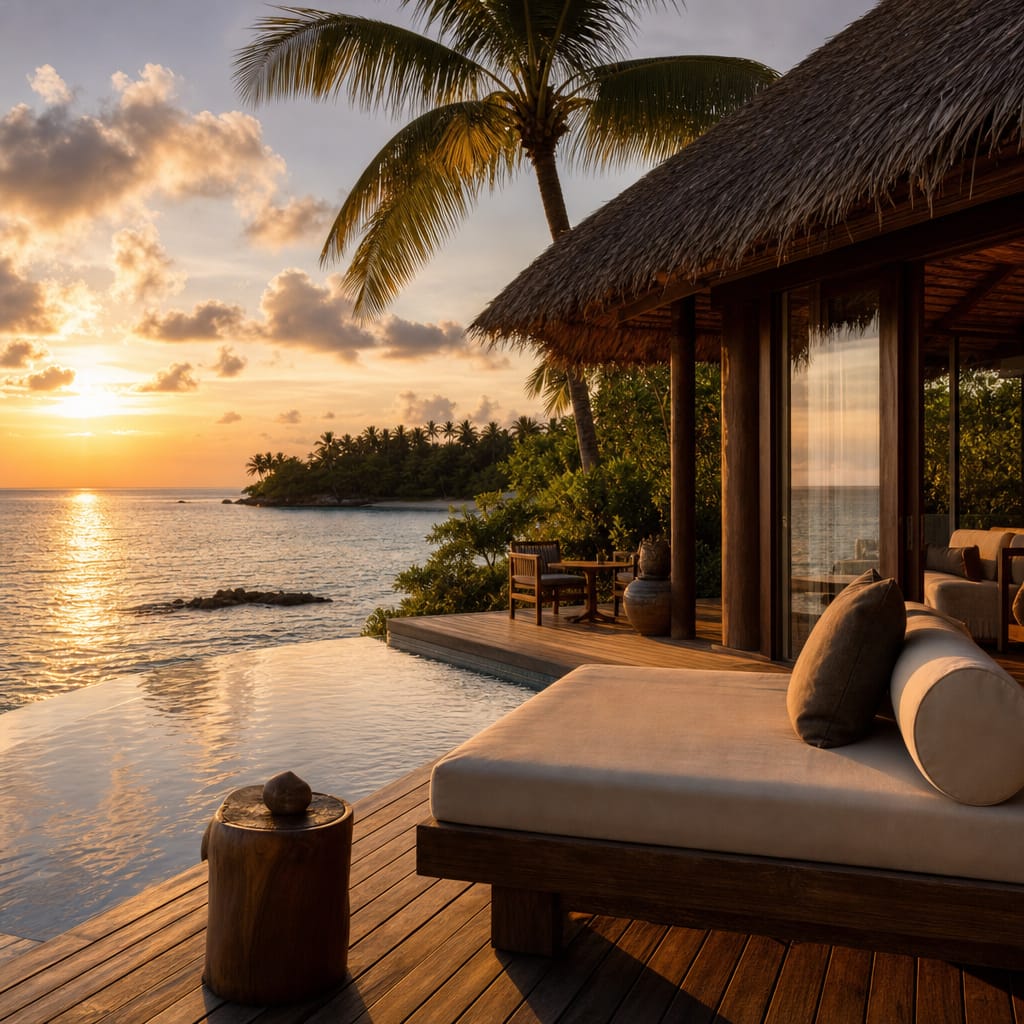




There's a specific kind of afternoon that precedes a certain kind of holiday booking. The house is quiet in a way it hasn’t been before – not peaceful, just wrong. Something has ended – a marriage, a career, a way of being you’d been living inside for twenty years. And then you are at your third cup of tea for the afternoon and staring at a wall. You open up your browser. You start to look at places you’d normally dismiss before the page has even loaded: lodges in Iceland, villas in Puglia, river cruises on the Nile. Not because you think you deserve them, exactly, but because you have absolutely no idea what else to do.
The luxury travel industry has known about this moment for a very long time. It has built itself, quietly and without ever quite saying so, around the rupture points in British life.
The Itinerary That Is Really a Therapy Plan
All luxury travel brochures read the same after a while. “Transformative”, “immersive”, “a journey of self-discovery” and “reconnect with what matters” recur. Space to reflect, time to breathe. Itineraries are built around sunrise yoga, silent dinners and guided walks through landscapes described, invariably, as “ancient” and “unchanged”. None of this is accidental.
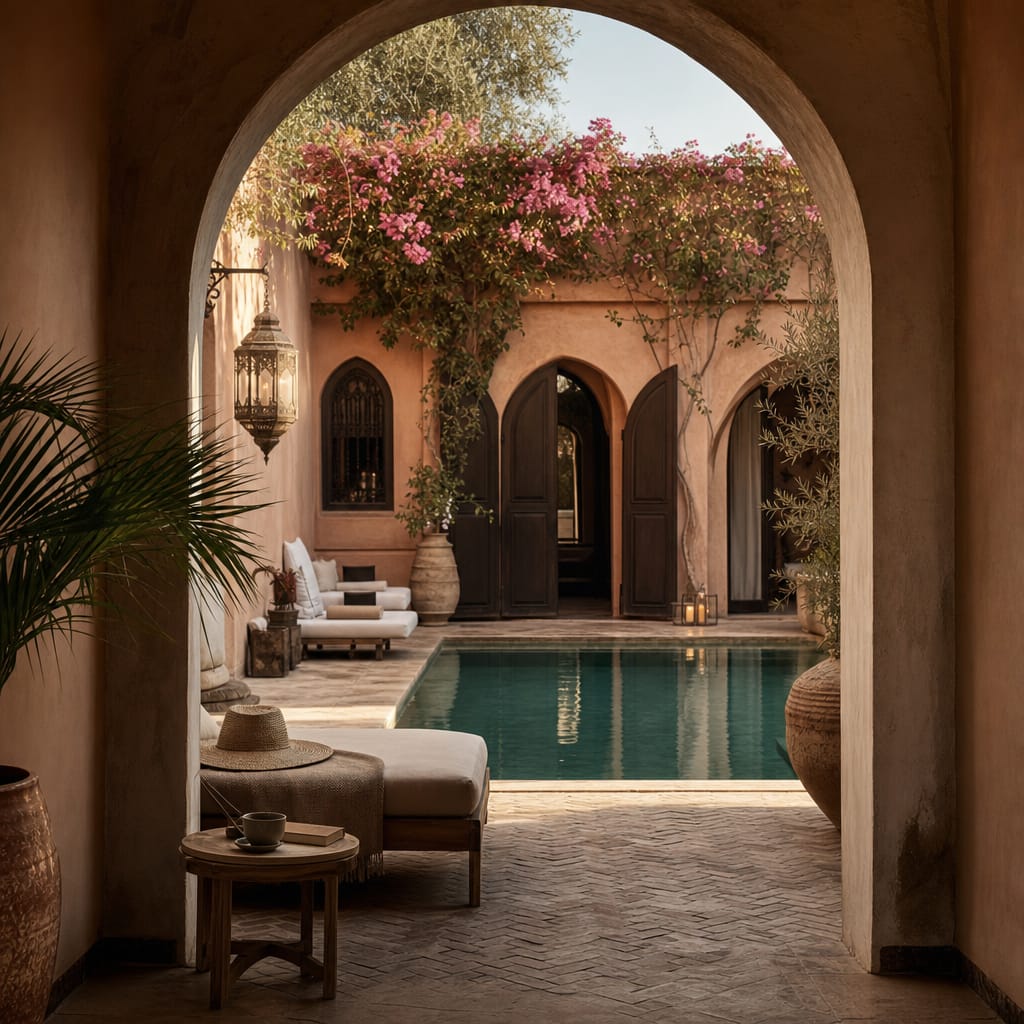
Grief language, tidied up and made aspirational. The real product of the luxury end of travel isn’t the thread count or the tasting menu – it’s suspension. A purchased pause between one chapter of a life and whatever comes next. That spa week in Marrakech isn’t selling you pampering. It’s six days in which you are not required to be anyone in particular.
The Single Supplement Tells You Everything
Here's a detail that gives the game away. Budget travel has largely done away with the single occupancy supplement — the surcharge for travelling alone, often 30 to 60 percent on top of the standard rate. Luxury has not. That's not arbitrary.
Solo travellers in the luxury bracket tend to be in their forties, fifties and sixties, and they book at moments of transition: post-divorce, post-bereavement, post-children leaving home. The supplement exists partly because filling a double room with one person costs the hotel the same, but it also marks out who this market expects to show up. Not a backpacker but someone who used to travel with another person and now does not.
The industry has started to respond – you'll find more "solo-friendly" luxury retreats, guaranteed shared dining tables, group departures designed for people travelling alone but not wanting to feel it. A kindness, genuinely. But it also tells you how clearly the market has mapped the emotional territory.
What the Romans Called It and What We Don't
Travel is one of the few ways of loosening the grip of fixed identities. It is probably Roman in origin, though it drifted through medieval European thought too. We go somewhere where nobody knows us, and for a while we are no longer parent, spouse, employee, inhabitant of a particular postcode. For a while we are nobody. And it is from being nobody that we start to get a sense of who we'd like to be next.
The grand Victorian tours were full of this: a widow who sailed to Egypt; a man who had sold his business and vanished to Italy for a season. Such travel was not indulgence but a transition – a physical space held open while the internal reorganisation happened. This is a function that luxury travel has inherited – you spend more to buy more time. A longer trip, fewer shared facilities and meals at your own pace. The specific unhurriedness that a genuine liminal period seems to require.
The Thing About Going Back
What's interesting – and this tends not to make it into the brochure – is that the trip doesn't resolve anything. The divorce is still the divorce when you land at Heathrow. The empty bedroom at home is still empty. But people who've taken these particular holidays often describe coming back differently to how they left, not because any problem has been solved abroad but because six days of not being required to perform their old life turned out to be exactly what thinking requires.
The luxury holiday, at its best, is less a reward and more a waiting room. A very beautiful one, with decent wine, where you are finally allowed to sit still.