


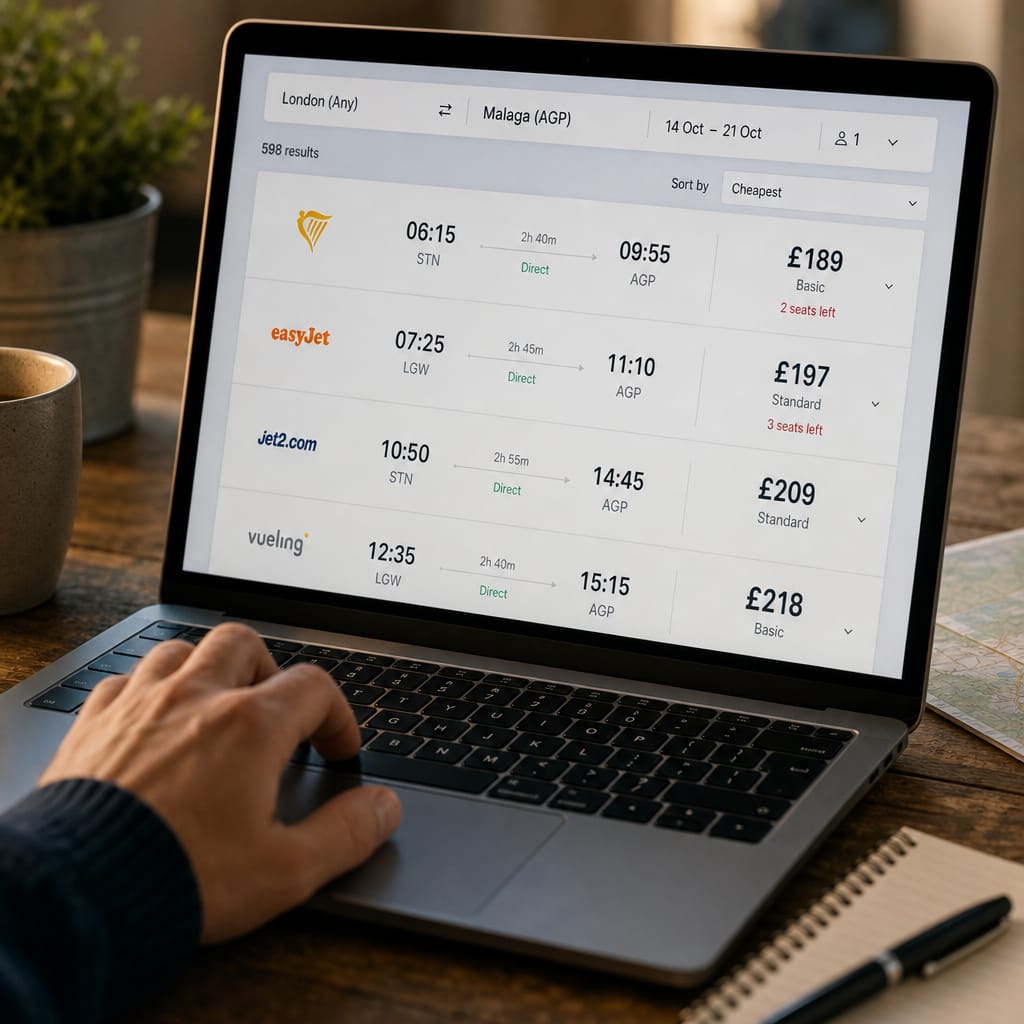
In the fourth hour of refreshing a flight comparison site, the cheapest available fare to Malaga is somehow more than you paid to fly to New York three years ago. The dates are mid-October. It's not a bank holiday. You have done everything right. But the number on the screen is laughing at you.
This is not a glitch. It is the budget airline model operating as designed – just working against you rather than for you.
How "Cheap" Flights Stopped Being Cheap
The thin margins that low-cost carriers run on are eroded when fuel prices are rising. When fuel is stable and airports are hungry for business, those margins hold and the £29 fare to Barcelona is real. But as soon as oil spikes – as it did after the 2022 energy crisis, and after the 1973 OPEC embargo before that – the model buckles almost immediately.
A chunk of the damage shows up as fuel surcharges. Airlines add these to the base fare in a way that looks, suspiciously, like a separate fee rather than the actual cost of your ticket. Carriers can 'hedge' their fuel costs by buying contracts in advance at a fixed price, which protects them for a while. When those contracts expire during a period of high prices, the fare jumps sharply. The airline did not suddenly get greedier, it just ran out of runway.
Then there is dynamic pricing – the system that adjusts fares in real time based on how many people are searching for the same route. If you search it twice on the same device, the price may have already climbed. This is not paranoia; it is the algorithm doing exactly what it was built to do. During economically anxious periods, when there are more searches by people hunting for deals and fewer by people booking speculatively, the search volume spikes and fares rise in response.
The result is that budget aviation stops being budget precisely when people most need it to be.
The 1970s Called, and Actually They Had a Point
Travelling slow, on land, and self-organised looks old-fashioned. It is, however, insulated from these pressures in a way that no low-cost carrier ever can be.
InterRail, which has existed in some form since 1972 and which millions of young Europeans used to get around the continent entirely by train, prices in a way that does not respond to oil shocks with anything like the same aggression. A rail pass costs what it costs. The trains run whether oil is £40 a barrel or £140, because for decades the fuel cost has been baked into the infrastructure rather than priced per passenger per day. During the 2022 energy crisis the gap between the cheapest European rail options and the suddenly-expensive short-haul flights narrowed to almost nothing. For some routes, it inverted entirely.
The same applies to ferries. They look slow and unfashionable, right up until the point when a Ryanair sale turns out not to exist, and crossing from Dover to Calais and then by French motorways and regional trains is immune to the hedging-contract cycle that makes Tuesday's flight price meaningless by Thursday.
Self-Catering in Places Nobody Has Marketed Yet
The other old trick is accommodation that doesn’t touch the hospitality industry’s pricing infrastructure at all – house-swapping, where you offer your home to someone in return for using theirs. It costs nothing but the membership of the swap platform, which runs to around £150 a year for most services. Since it isn’t priced in pounds in the first place, it’s entirely recession-proof.
Renting a farmhouse or gîte direct from an owner, particularly in rural France, Portugal or inland Spain, routes around the dynamic pricing that now governs Booking.com and Airbnb just as thoroughly as it governs airlines. And off-grid places in unfashionable regions, such as the Auvergne (not Provence) or inland Alentejo (not the Algarve), often sit outside the algorithm’s field of vision entirely.
What Budget Travel Actually Means When the Economy Hurts
It wasn't the travellers who came out of the 1970s oil shocks and the 2008 crash still going on holiday who hunted harder for cheap flights. It was those who, almost by accident, had built itineraries around mechanisms that do not care what happens at a fuel terminal in Rotterdam.
None of this requires suffering. Slower travel is often better – a sleeper train through France is more enjoyable than a 6am flight from Stansted. Self-catering in a village market town is cheaper and more interesting than an all-inclusive in a resort that has been fully optimised to extract money from you.
The budget airline era was real, and it was genuinely useful while it lasted. It just was not the whole story.
FAQ
Why do budget flights get more expensive when fuel prices rise?
Low-cost carriers operate with thin margins, and rising fuel prices eat into these rapidly. Airlines can try to mitigate these costs by entering into fixed-price fuel contracts in advance. However, these contracts have an expiry date, after which fares can jump sharply if prices are high. Fuel surcharges are also added to the base fare of flights.
Does dynamic pricing mean flights cost more if I search twice?
Yes, it can. When airlines implement a dynamic pricing policy, fares change in real time as more people search for the same route. So by your second search for the same route on the same device, prices may have already increased. When anxious bargain hunters search for flights in increasing numbers, prices will increase too.
Is travelling by train or ferry cheaper than flying when prices rise?
InterRail and other rail passes are generally less affected by oil price rises. InterRail has been around in some form or another since 1972, and fuel costs are built into the rail infrastructure. In the 2022 energy crisis, prices for short-haul flights became as cheap as, or even cheaper than, rail travel on some European routes.
How can I cut accommodation costs when booking sites get expensive?
Consider house-swapping or renting a property direct from an owner. Membership of swap platforms costs around £150 per year for most services, and the swap itself isn’t priced in pounds. In rural France, Portugal or inland Spain, renting a farmhouse or gîte direct from an owner avoids the dynamic pricing that Booking.com and Airbnb operate on.